
Reform of the IEBC is no longer a theoretical debate. It requires urgent structural and operational changes: stronger safeguards for its independence, improved technological capacity, transparent recruitment of commissioners, and strict oversight mechanisms insulated from political interference. If Mr Ethekon cannot guarantee neutrality and competence, calls for his resignation will only grow louder.
To unlock the full article:
Choose one of the options below:
- Ksh 10 – This article only
- Ksh 300 – Monthly subscription
- Ksh 2340 – Yearly subscription (10% off)
By The Weekly Vision Reporter
The by-elections held across the country on 27th November 2025 were expected to pass quietly, offering the country a routine test of its electoral machinery. Instead, the events of the day revealed the extent to which the Independent Electoral and Boundaries Commission (IEBC), under Chairperson Erastus Edung Ethekon, is struggling to deliver credible and orderly polls.
What unfolded across the 22 affected constituencies and wards, including Kasipul, Malava and Mbeere North, went well beyond minor disruptions. Scenes of violence, missing documents, contradictory instructions, and aggrieved candidates cast doubt not only on the day’s results but on the country’s preparedness for the 2027 General Election.
Mr Ethekon, appointed earlier this year with promises of restoring trust in the electoral process, now finds his leadership under intense scrutiny. Rather than projecting authority, the commission appeared overwhelmed, reactive and unable to prevent serious breaches of electoral integrity.
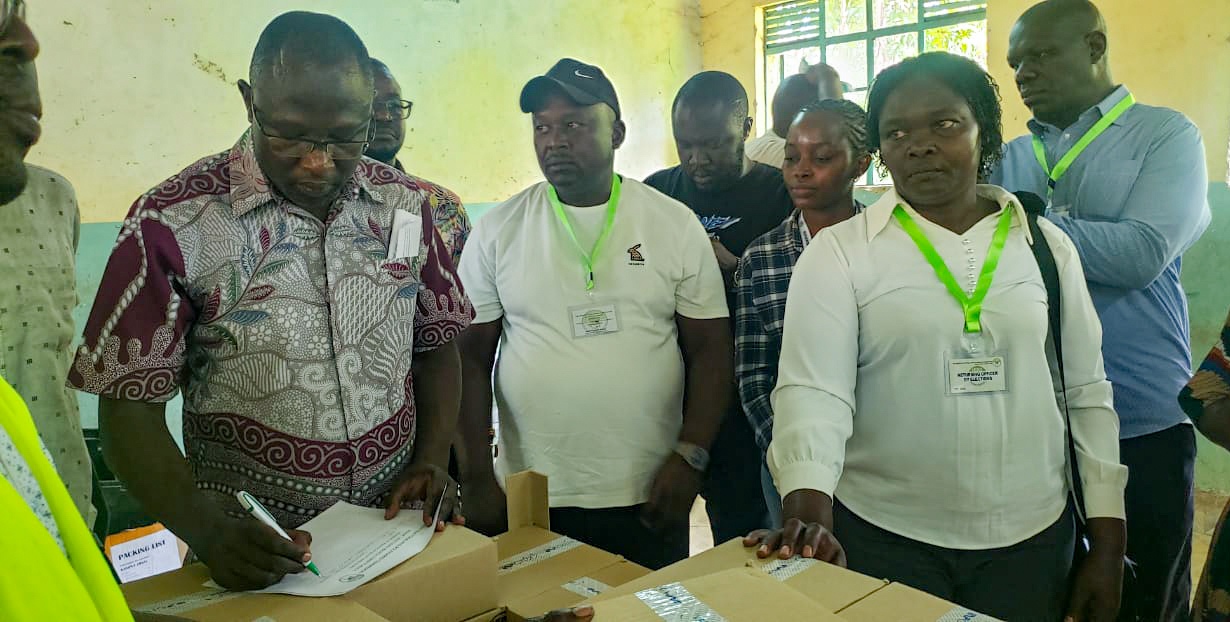
Field reports from across the country were strikingly similar. In Kasipul, two people lost their lives, and Homa Bay Town MP Peter Kaluma was injured during chaotic confrontations. Governor George Natembeya’s convoy came under attack in Trans Nzoia. Delayed deliveries of ballot materials, failure of electronic kits, and unexplained disappearance of voter registers were reported in several polling stations. Many of the complaints raised by agents and observers point to systemic coordinated failures within the IEBC’s field management teams.
The commission’s enforcement of electoral rules was equally troubling. Although two candidates in Kasipul were eventually fined for inciting violence, the penalty came after serious damage had already occurred. In Malava, the arrest of DAP–K candidate Seth Panyako triggered accusations of selective policing and intimidation, with the party alleging that the authorities ignored violence aimed at its supporters.
The IEBC’s public statements throughout the day struggled to match the gravity of what voters were experiencing. While the commission dismissed claims of ballot-stuffing as unfounded, basic inconsistencies emerged among its own officials. Several presiding officers gave conflicting accounts of procedures, agents were removed from polling centres without clear justification, and the electronic results transmission system faltered repeatedly, enabling media tallies to outpace the IEBC’s official updates.
Such shortcomings raise serious constitutional concerns. Article 81(e) demands elections free from violence, coercion and corruption. The events of these by-elections fall short of that standard.
Opposition leaders were swift in their criticism. Siaya Governor James Orengo likened the day’s violence to the infamous Mlolongo episode of the 1980s, denouncing what he described as the “deliberate inaction” of security agencies. ODM Secretary-General Edwin Sifuna accused the IEBC of operating in alignment with state interests, a claim echoed by several candidates who reported voter bribery, attacks by hired gangs and intimidation by police.
For Mr Ethekon, the political and public expectations were high. With his background in law and governance, he was to be the steady hand guiding the IEBC out of years of turbulence. Instead, his tenure is now associated with a weakened institution unable to confront fundamental challenges: vetting of candidates, security coordination, protection of polling stations, and safeguarding of voter rights.
The consequences of these failures are far-reaching. Low turnout recorded in several areas is a clear warning that public confidence is waning. Analysts caution that unless decisive reforms are undertaken, Kenya risks walking into the 2027 elections with institutions incapable of preventing large-scale disputes, a scenario that could provoke instability similar to the post-election crisis of 2007–08.
Reform of the IEBC is no longer a theoretical debate. It requires urgent structural and operational changes: stronger safeguards for its independence, improved technological capacity, transparent recruitment of commissioners, and strict oversight mechanisms insulated from political interference. If Mr Ethekon cannot guarantee neutrality and competence, calls for his resignation will only grow louder.
However, the responsibility does not rest with the IEBC alone. Political parties across the divide must cease the use of violence, bribery and ethnic mobilisation as campaign tools. State agencies, particularly the police, must uphold the principle of equal protection for all contestants, regardless of political affiliation.
As petitions challenging the by-election results begin to surface, it is clear that the courts will again play a critical role. Yet even successful legal challenges will not repair the deeper institutional weaknesses exposed last week. Kenya has reached a turning point: either cement electoral integrity through firm action, or risk entering 2027 with a broken system and a disillusioned electorate.
The by-elections have delivered a stark message. The country can no longer ignore the structural decay within its electoral framework. It must choose renewal, or face the consequences.
[/full]