
By The Weekly Vision Reporter
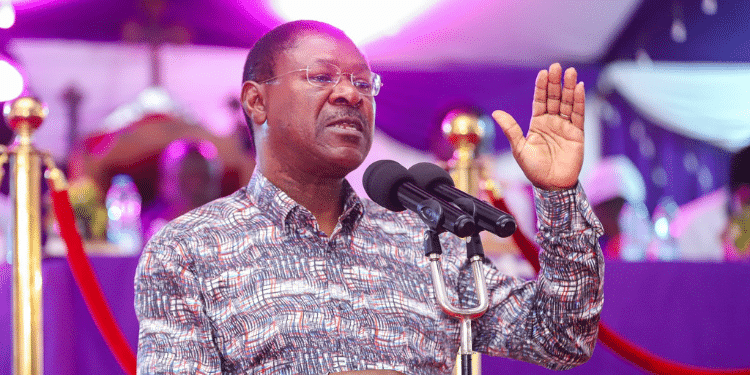
The Court of Appeal has stopped the hearing of a defamation suit filed by National Assembly Speaker Moses Wetang’ula, who is seeking damages from the British Broadcasting Corporation (BBC) over the 2015 documentary Panorama: The Secret Bribes of Big Tobacco. The programme, aired on 30 November and 4 December 2015, alleged that Wetang’ula, then the Senator for Bungoma, was among individuals bribed by British American Tobacco (BAT).
The BBC moved to the appellate court after the High Court dismissed its application to stay proceedings pending a response from UK authorities.
Wetang’ula contends that the documentary was defamatory for suggesting he received a bribe and corrupt benefits from BAT. He seeks, among other remedies, a permanent injunction barring further publication of the allegations, general and aggravated damages, costs and interest.
BBC, in its defence, admitted publishing the material but denied that it was defamatory or malicious, arguing that it interviewed Wetang’ula and included his response. It also invoked qualified privilege, citing court proceedings in the UK in which BAT allegedly conceded that payments made to Wetang’ula constituted unlawful bribes.
On 13 July 2022, BBC asked the High Court, under Section 54 of the Civil Procedure Act and Order 28 Rule 4 of the Civil Procedure Rules, for a Letter of Request to the High Court of Justice in England seeking examination of relevant witnesses and production of documents. It also sought a stay of proceedings pending the outcome.
Wetang’ula opposed the application, citing inordinate delay, reliance on non-existent legal provisions, vagueness, ambiguity and the inconvenience it would cause.
On 5 October 2023, the High Court rejected the Letter of Request, saying it was overly broad and lacking particulars of the evidence sought or identification of witnesses. The stay of proceedings was also denied.
Aggrieved, BBC filed a notice of appeal on 17 October 2023, followed by a record of appeal on 3 March 2025. On 24 June 2024, it once again sought a stay of proceedings, but the High Court dismissed the application on 21 November 2024 for inordinate delay and absence of a memorandum of appeal.
BBC then filed a fresh notice of appeal on 4 December 2024 and brought the current application for stay before the appellate court. Its lawyer, Samil Inamdar, relied on affidavits sworn on 3 March and 7 May 2025, and written submissions dated 8 May 2025.
He argued that the Court of Appeal’s jurisdiction under Rule 5(2)(b) is original and discretionary, meaning that the High Court’s earlier refusal to grant a stay did not bar the appellate court from entertaining a similar application. He maintained that the pending appeal is arguable, raising issues such as whether the High Court erred in describing the Letter of Request as vague when BBC had sought a specific BAT investigation report.
The BBC argued that the report, referenced in litigation against BAT in England, reveals that BAT employees offered corrupt benefits to several individuals, including Wetang’ula, and could only be released under a court order. It further contended that the appeal questions the High Court’s interpretation and application of the law on Letters of Request to foreign courts.
The BBC submitted that unless the High Court proceedings are halted, its appeal would be rendered nugatory, as the trial would proceed without crucial evidence, violating its right to a fair hearing under Article 50 of the Constitution.
Wetang’ula opposed the application through affidavits sworn on 17 March and 8 May 2025. He argued that the application was incompetent as it relied on affidavits by the BBC’s advocates on contentious matters and that the appeal was frivolous. He insisted that the Letter of Request was merely a belated attempt by the BBC to gather evidence it should have had before publishing the documentary. He cited past cases affirming that courts should not assist parties to obtain evidence in adversarial proceedings.
On the issue of whether the appeal risked being rendered nugatory, Wetang’ula argued that the BBC had failed to demonstrate any such danger.
Court of Appeal Ruling
In a ruling delivered in November, Justices Wanjiru Karanja, Kathurima M’Inoti and K. Achode held that it was not their role at this stage to make definitive findings on the merits of the appeal.
On the competence of the application, the judges noted that while counsel generally may not swear affidavits on contentious matters, they are permitted to depose to facts within their knowledge. BBC’s counsel, they held, had sworn affidavits falling within the permitted exceptions.
Addressing the alleged delay, the Bench said Rule 5(2)(b) gives the Court original and discretionary jurisdiction that is not dependent on earlier High Court decisions. The gap between the High Court ruling on 27 November 2024 and the lodging of the application on 3 March 2025, slightly over three months, was not inordinate.
The judges further held that an arguable appeal need not ultimately succeed; it only needs to raise at least one bona fide issue worth consideration, a threshold BBC had met.
On whether the appeal risked being rendered nugatory, the Court noted that while stay orders must be applied cautiously, Rule 5(2)(b) expressly empowers the Court to stay proceedings where circumstances warrant.
The Bench emphasised that the right to a fair trial under Article 25(c) of the Constitution is non-derogable. Proceeding with the trial without resolving whether the BBC is entitled to seek the evidence requested could violate that right.
“Ultimately, we are persuaded that the applicant has satisfied both considerations under Rule 5(2)(b) and is entitled to an order of stay of further proceedings in the High Court,” the judges ruled. “We hereby issue the stay until the hearing and determination of the applicant’s appeal. Costs will abide the outcome of the appeal. It is so ordered.”