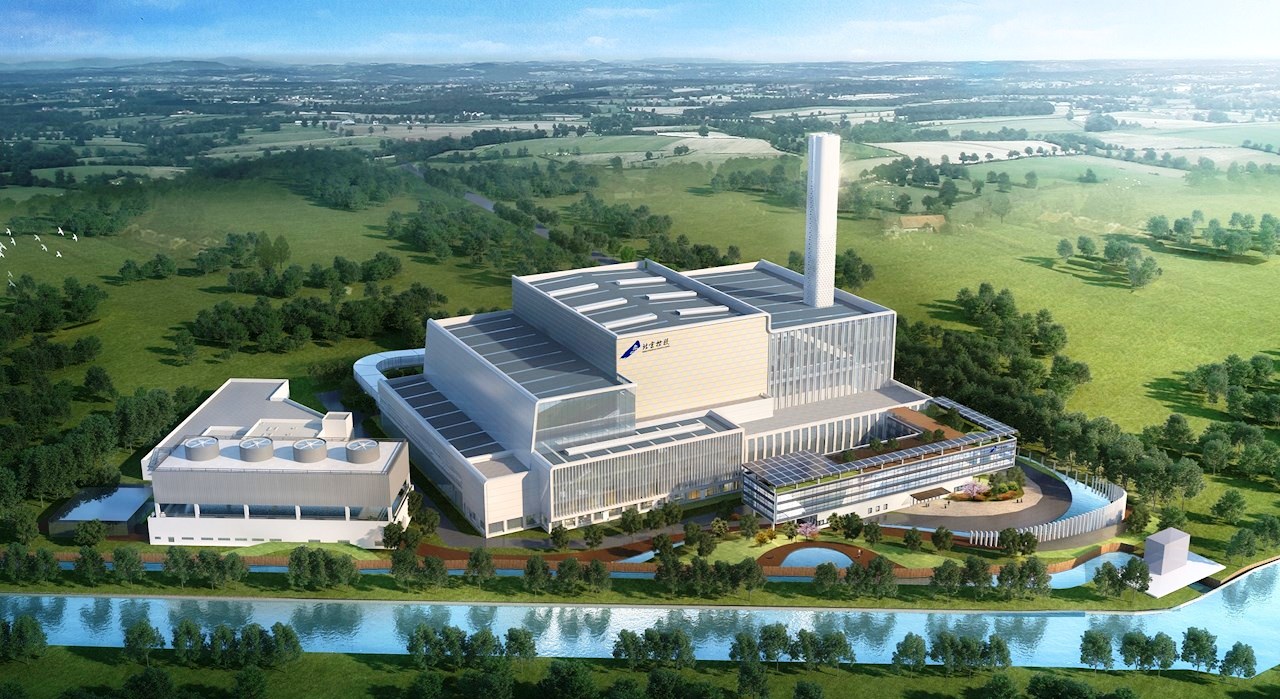
As foreign firms from Norway and Ghana’s Jospong Group circle Nairobi’s infamous Dandora dumpsite with ambitious waste-to-energy and circular economy proposals promising billions in investment, cleaner power, and site rehabilitation, fresh allegations of a quiet handover of key county functions to the national government have ignited fierce debate. Governor Johnson Sakaja vehemently denies any constitutional transfer of solid waste, roads, or water services, framing recent talks with President William Ruto as mere collaboration, yet the President’s public hints at shared responsibility, a stalled KSh 47 billion Chinese deal, and mounting scrutiny over political influence and opaque procurement have thrust Nairobi’s long-festering garbage crisis into the spotlight as a battleground for devolution, foreign investment, and urban transformation
To unlock the full article:
Choose one of the options below:
- Ksh 10 – This article only
- Ksh 50 – Access to ALL articles on the site (full site access)
- Ksh 300 – Monthly subscription
- Ksh 2340 – Yearly subscription (10% off)
By The Weekly Vision Investigations Desk
Fresh claims that Nairobi Governor Johnson Sakaja has agreed to transfer key county functions to the national government have reignited fears of a quiet return to the centralisation model that once reshaped City Hall.
The claims mirror the controversial 2020 arrangement that led to the establishment of the Nairobi Metropolitan Services under the administration of former Governor Mike Sonko, when several county responsibilities were temporarily transferred to the national government. At the centre of the current controversy are three critical services: solid waste collection and disposal, public works (including road construction and maintenance), and water supply and distribution.
Although Governor Sakaja has dismissed the reports as “fake news”, insisting that no transfer of functions has taken place under Article 187 of the Constitution, the political messaging from State House has told a different story. On Sunday, February 8, 2026, President William Ruto publicly hinted at an emerging collaboration between the national government and Nairobi County on waste management, roads and water while addressing a rally after a church service in Pipeline Estate.
In his remarks, the President spoke of a shared plan with the governor to make the capital cleaner, more accessible and better organised, linking the initiative to his long-stated vision of transforming Nairobi into a modern, efficient city.
That public overture has fuelled concern among Nairobi’s elected leaders. Senator Edwin Sifuna and Embakasi East MP Babu Owino have questioned the opacity surrounding the arrangement, citing the absence of a formal deed of transfer, County Assembly approval, and a clear framework for funding and staffing.
Supporters of closer national–county coordination argue, however, that sectors such as waste management and road maintenance have remained mired in inefficiency and corruption, and that joint action could stabilise critical services.
As the political debate intensifies, international attention has turned sharply to Dandora Landfill, Nairobi’s sprawling dumpsite that for decades has symbolised the city’s environmental and public health crisis. The Weekly Vision has established that two foreign entities, one from Ghana in West Africa and a separate group of financiers from Norway, toured the site in recent months and submitted separate redevelopment proposals to different arms of government.
The Norwegian team presented a proposal titled Nairobi Material Recovery and Energy Project to Nairobi County in late 2025, while the West African firm submitted its proposal to the national government.
Sources familiar with the engagements say both delegations carried out technical inspections of Dandora to assess its potential for a large-scale waste recovery and energy project. Under the Norwegian proposal, all of Nairobi’s municipal solid waste would be processed to extract maximum material and energy value while cutting emissions. Sewage would also be treated to produce usable by-products, rehabilitate the site and return sections of the former dumpsite to public and green use.
The project would also seek to offset part, or potentially all, of Nairobi County’s electricity bill through on-site power generation, generate revenue for the county and create new employment opportunities. The Norwegians are positioning Nairobi as a pilot city for a large-scale circular economy model, with an estimated capacity of about 3,000 tonnes of waste per day. They project the production of electricity, clean water and bio-products, alongside a significant reduction in pollution and disease risks around Dandora.
The core facilities would be anchored at the Ruai Waste Water Treatment Plant, combining modern wastewater treatment, biogas generation and a material recovery facility within a single complex. According to the proposal, the integrated plant could generate more than 200 megawatts of clean power, with surplus electricity transmitted through Kenya Power.
The developers estimate the project would cost about US$500 million, financed by the investors and recovered through the sale of power generated by the facility, at no direct cost to taxpayers.
The second suitor is Ghana’s Jospong Group, whose financing and technical model for Nairobi remains less clear. While details of its proposal have not been made public, multiple sources say company officials have recently held meetings with senior figures within President Ruto’s administration. The same sources allege that the firm enjoys close access to influential political actors in Kenya, a factor they believe has strengthened the acceptability of its approach and may be influencing the push to shift some county functions to the national government.
The group’s Executive Chairman, Joseph Siaw Agyepong, also led a delegation to Mombasa in July 2025 for talks with Governor Abdulswamad Sherrif Nassir on sustainable waste management. The engagements were followed by a reciprocal visit by Mombasa officials to Ghana.
In August 2025, the company also featured prominently at the Devolution Conference in Homa Bay, where President Ruto publicly praised its technologies during a visit to its exhibition stand. One of Jospong’s flagship subsidiaries, Zoomlion Ghana Limited, operates in integrated waste treatment, recycling, composting and sanitation services across several African markets.
Despite its continental footprint, Jospong’s Nairobi overtures have attracted scrutiny because of its perceived proximity to political power. As the firm advances its African expansion drive, questions persist over whether its engagement in Dandora reflects an open and competitive investment process or a behind-the-scenes arrangement.
The new proposals emerge against the backdrop of a controversial waste-to-energy tender that has already cast a long shadow over Nairobi County’s waste management programme. Tender No. NCC/ENV/RFP/287/2022–2023, for the design, financing, construction, operation and maintenance of a waste-to-energy plant at Dandora, was awarded amid allegations of bribery, bias and procedural irregularities. Sources familiar with the evaluation process say the assessment was marred by predisposition and subjectivity, leaving only one bidder at the final stage. A notice of intention to enter into a joint venture dated 25 July 2023 was signed by the then Chief Officer for Environment, Ibrahim Otieno.
The contract was eventually awarded to China National Electric Engineering Company Limited for a reported KSh 47.1 billion. However, the project has since stalled. On 19 September 2025, Governor Sakaja signed a Project Development Agreement with the Chinese firm on behalf of Nairobi City County. At the time, the Ministry of Energy, through the Energy and Petroleum Authority (EPRA), was reportedly at an advanced stage of finalising a power purchase agreement, though the current status of that process remains unclear
In a parallel effort to confront the waste crisis, Sakaja also established Green Nairobi Company Limited. The entity quickly ran into controversy after individuals close to the governor were named as directors, raising questions about whether it is a public vehicle of the county or a privately controlled company.
As Nairobi struggles to tame its long-running waste emergency, the latest foreign proposals promise cleaner energy, environmental restoration and improved public health. Yet they also magnify long-standing concerns about political influence, opaque decision-making and procurement capture, particularly while the debate over the possible transfer of county functions remains unresolved.
President Ruto’s recent pronouncements on the phased relocation of Dandora’s operations to Ruai, and investments in waste-to-fertiliser and waste-to-energy facilities, underline growing national interest in the sector.
Without transparent approvals, competitive tendering and public accountability, however, Nairobi risks repeating the costly mistakes of past interventions and turning a genuine environmental opportunity into yet another governance failure.
[/full]