By The Weekly Vision Reporter
Kenya’s Cabinet has rolled out a sweeping package of reforms targeting payroll corruption, drought response, economic growth, education, infrastructure and regional diplomacy, in what the government described as one of its most decisive policy interventions in recent years.
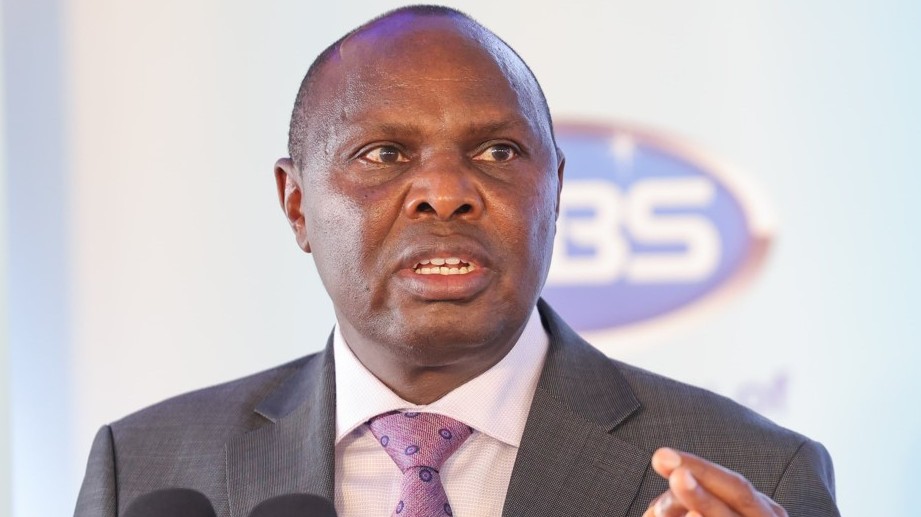
Speaking to the press on Tuesday, 10 February 2026, Head of Public Service Felix Koskei said the government would no longer tolerate weak controls and impunity in the public service. “The era of complacency is over. Every public officer will be held accountable. Integrity is non-negotiable,” Koskei said.
The decisions follow a damning audit of the 2024–2025 Human Resource Information System for Kenya (HRIS-K) payroll, which exposed widespread system manipulation and weak safeguards.
According to Koskei, about 4.7 million payroll records were altered by 720 system editors without proper audit trails. Some of the editors were found to have modified their own records, while basic cybersecurity controls were absent, and disaster recovery arrangements were inadequate. “We cannot allow our systems to be manipulated. This is not just about money, it is about public trust and safeguarding national resources,” he said.
To address the failures, the Cabinet approved a complete reset of HRIS-K governance, mandatory system security certification by 11 March 2026, and the deployment of forensic data analytics to trace and identify wrongdoing.
The government will also establish dedicated Payroll Audit Units and enforce statutory deductions directly at source. Public officers will be required to take responsibility for payroll data under their control. “Accountability starts at the top. Officers must own their payroll data, or face consequences,” Koskei warned.
At the same time, the Cabinet approved emergency interventions to respond to a worsening drought situation across the country. An estimated 3.3 million people are currently food insecure, with the number projected to rise to 3.6 million by June 2026.
To cushion vulnerable households, the government approved KSh4.1 billion in emergency funding to support the delivery of relief food, non-food assistance and logistics operations. “We are staring down a humanitarian emergency. Speed and coordination are critical to prevent this crisis from escalating further,” Koskei said.
Cabinet also unveiled the 2026/27 national budget framework, signalling a policy shift from fiscal stabilisation to strategic public investment aimed at driving inclusive economic growth.
The proposed budget totals KSh4.7 trillion, with recurrent expenditure estimated at KSh3.46 trillion, development spending at KSh749.5 billion and county transfers amounting to KSh495.7 billion.
Koskei described the spending plan as a roadmap for economic recovery and shared prosperity under the Bottom-Up Economic Transformation Agenda. “This is a blueprint for growth, ensuring every citizen benefits from our national resources,” he said.
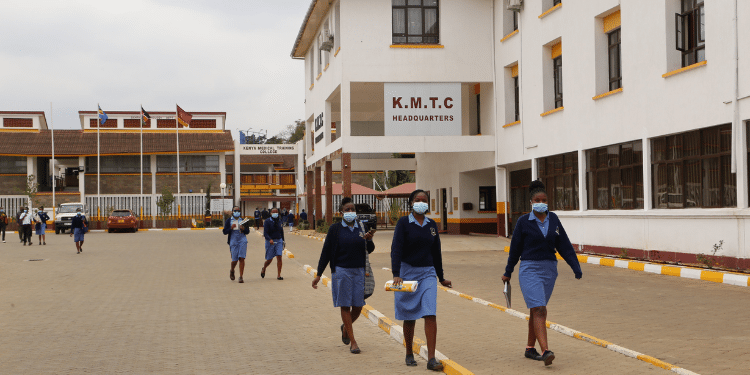
Education reforms formed a central pillar of the Cabinet resolutions. Koskei said the changes would overhaul governance structures, curriculum delivery, assessment systems and teacher training, describing the reforms as “once-in-a-generation”.
The government will deepen the shift towards competency-based learning, replacing the traditional examination-centred model.
In technical training, Phase III of the Kenya–China Technical and Vocational Education and Training (TVET) Project will equip 70 colleges and train 1,190 instructors in priority technical fields, in an effort to align skills development with labour market needs.
Infrastructure development also received renewed emphasis, with US$128 million approved for the Mwache Multipurpose Dam. The project is expected to improve water supply in Kwale and Mombasa counties while strengthening climate resilience.
The Cabinet further approved updated devolution policies to clarify the roles of national and county governments, improve coordination and reinforce accountability frameworks. “Devolution has delivered, but we must now sharpen clarity, accountability and performance,” Koskei said.
On the international front, the government announced that Kenya will host the International Nuclear Conference 2026, establish offices for the International Vaccine Institute and set up the Eastern Africa Regional Coordination Centre for the Africa Centres for Disease Control and Prevention.
Koskei said the moves would position Kenya as a regional hub for diplomacy, science and development. “Kenya is asserting itself as a leader in diplomacy, science and regional development,” he said.
Summarising the outcomes of the Cabinet session, Koskei said the government was committed to restoring integrity in public systems, addressing urgent humanitarian needs and investing in long-term national development. “We are implementing reforms that will deliver real results for Kenyans, now and for generations to come,” he said.