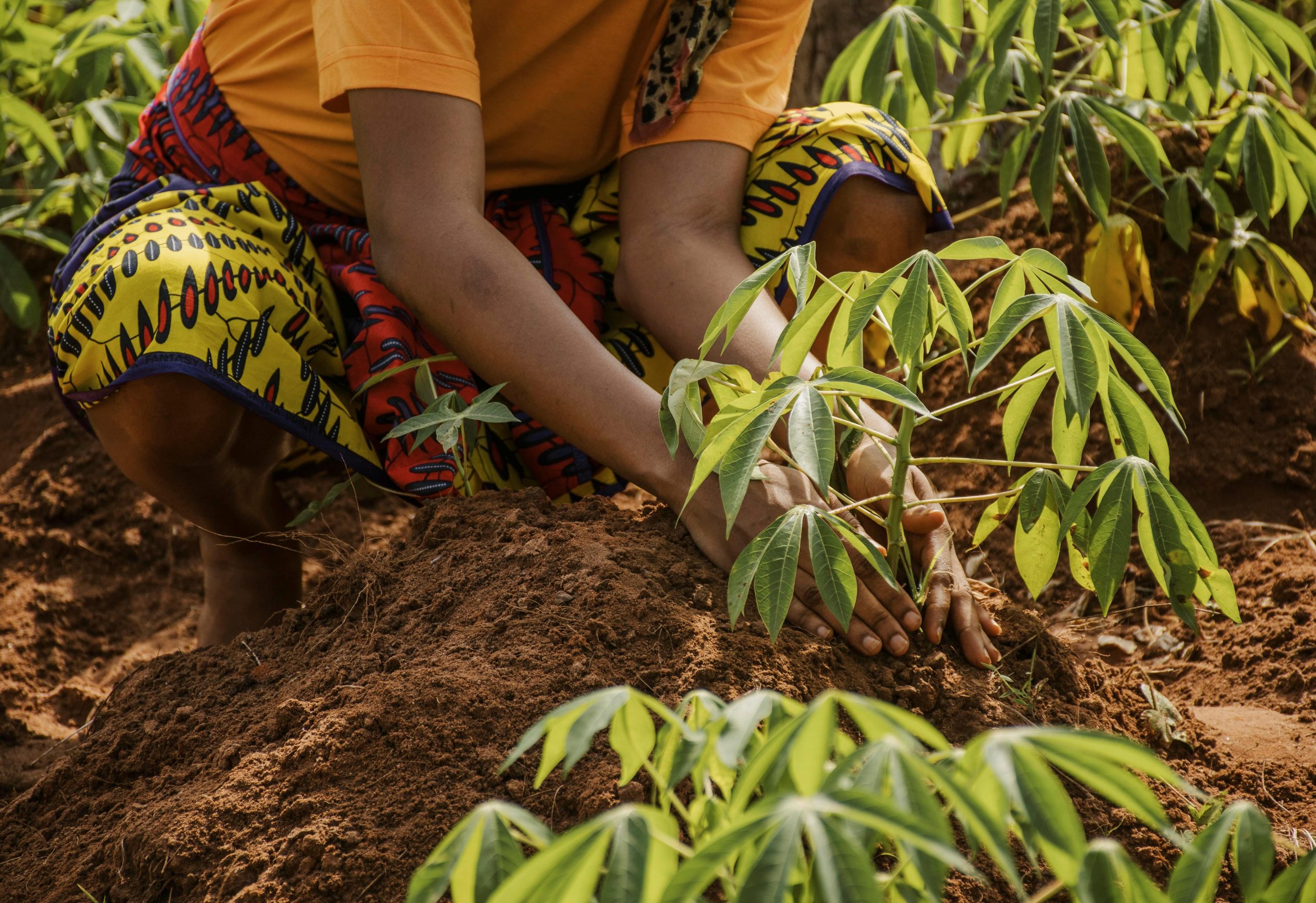
Awareness of the Climate-Smart Agriculture Strategy stands at 79 per cent. Farmers are increasingly adopting practices such as water harvesting, agroforestry, drought-tolerant crops, organic pest control and soil-fertility management, with particularly high uptake in Busia and Nyeri, where civil society and government support is strong
By The Weekly Vision Reporter
A new assessment of the implementation of Kenya’s Climate-Smart Agriculture Strategy (KCSAS) finds that while awareness and adoption of climate-smart agriculture (CSA) practices are increasing, limited financing, weak institutional coordination and fragmented monitoring systems are slowing progress towards a climate-resilient agricultural sector.
Commissioned by ACT Kenya Forum and its national member, ADS Kenya, under ACT Alliance’s Africa Climate Adaptation Advocacy Project, the study covered eight counties, Busia, Nyeri, Kajiado, Turkana, Garissa, Kisumu, Kilifi and Kitui, using surveys, focus group discussions and key informant interviews.
Agriculture remains the backbone of Kenya’s economy, contributing more than 30 per cent of GDP and employing about 70 per cent of rural households. However, climate shocks, from prolonged droughts and floods to increasingly erratic rainfall, continue to undermine livelihoods. Between 2020 and 2023, Kenya experienced the worst drought in four decades, affecting more than four million people. The sector also accounts for approximately 41 per cent of national greenhouse-gas emissions, largely from livestock, fertiliser use and land-use change.
The KCSAS (2017–2026) was designed to increase agricultural productivity, enhance resilience and reduce emissions in line with Vision 2030, the Paris Agreement and the Sustainable Development Goals (SDGs).
Awareness of CSA stands at 79 per cent. Farmers are increasingly adopting practices such as water harvesting, agroforestry, drought-tolerant crops, organic pest control and soil-fertility management, with particularly high uptake in Busia and Nyeri, where civil-society and government support is strong.
While 87 per cent of surveyed counties report mainstreaming CSA into their strategies and plans, only 42 per cent have dedicated budget allocations for CSA interventions.
Seventy-one per cent of counties have institutional frameworks for CSA, but coordination between national and county levels remains weak. Only 39 per cent have CSA-specific monitoring and evaluation systems.
Sixty-four per cent of farmers reported adopting at least one CSA practice. Adoption rates are higher in counties with active extension services (73 per cent) compared to those with limited support (49 per cent).
Fewer than 30 per cent of counties access climate finance from national or international sources. Private-sector engagement remains limited, with only 18 per cent reporting partnerships in CSA financing, leaving many counties heavily dependent on donor funding.
Fifty-six per cent of counties have collaborated with research institutions on CSA innovations, yet only 46 per cent of farmers received CSA-related training in the past two years.
Women make up 61 per cent of small-scale farmers surveyed, rising to about 96 per cent in Kitui, but continue to face barriers to finance, land ownership and training. Youth participation in CSA enterprises stands at 41 per cent, signalling strong potential with targeted support.
Counties with strong CSA adoption recorded 15–25 per cent higher yields during climate shocks compared to non-adopting areas, while CSA adopters showed 22 per cent higher average household food-security scores.
Faith-based organisations play a critical role in grassroots outreach and last-mile delivery, but are often excluded from policy forums and coordination platforms.
Low-cost digital tools, including SMS and WhatsApp platforms, are proving effective in disseminating weather information and advisory services to smallholder farmers.
The report calls for stronger coordination through CSA working groups at both national and county levels, with formal inclusion of non-state actors. It also recommends formal recognition of faith-based organisations in policy processes and grassroots implementation, as well as increased and diversified financing through county budget lines, improved access to climate-finance windows and private-sector incentives such as tax reliefs and blended-finance models.
Additional recommendations include expanding extension services and capacity-building programmes for women and youth through digital advisory platforms; establishing robust monitoring, evaluation and learning systems with CSA-specific indicators; and promoting gender-responsive and inclusive CSA models that recognise and leverage traditional knowledge.
Anglican Archbishop Jackson Ole Sapit said: “Only a few counties have dedicated budgets for CSA, with fewer than 30 per cent accessing climate finance. Farmers, especially women and youth, need more than encouragement; they need access to affordable finance, insurance and investment. Let us be bold in creating county-level budget lines for CSA, opening climate-finance windows and incentivising the private sector through tax reliefs and blended-finance models, as the report recommends. As the Church, we are not mere bystanders. Through ADS Kenya and the Green Anglican Movement, we are already training communities, promoting tree-growing, supporting clean-energy adoption and mobilising thousands of congregations for climate action.”
Vincent Ondieki, Senior Programme Officer for Climate Justice at ACT Alliance, said the report serves as both a reflection of progress made and a guide to the urgent steps ahead.
“Climate change is not only an environmental issue, but also a justice and livelihoods issue. By working together, government, counties, development partners, the private sector and faith communities, we can transform Kenyan agriculture into a resilient, sustainable and inclusive system that leaves no one behind.”
ACT Alliance Global Programme Manager Julius Mbatia noted that CSA interventions remain heavily dependent on donor funding, while domestic budget allocations remain low and many counties struggle to access international climate finance due to capacity gaps and complex application processes.
“Blended finance models, climate-smart credit and index-based insurance offer promising opportunities that remain underexplored. Strengthening county-level capacity, establishing a national coordination platform and developing a unified monitoring framework are critical if Kenya is to move from plans on paper to real, lasting impact for farmers, communities and the environment,” he said.