In Kenya’s Kasigau Corridor, a celebrated REDD+ carbon project sold credits to Shell, Netflix and Microsoft to offset their emissions, while senior staff allegedly subjected women rangers and community members to a decade of sexual coercion, harassment and abuse in exchange for jobs and basic survival. The alleged conduct created a climate of fear that, survivors say, has persisted even after the 2023 exposés, staff dismissals and the eventual clearance by Verra, leaving long-standing calls for justice and compensation largely unanswered
To unlock the full article:
Choose one of the options below:
- Ksh 10 – This article only
- Ksh 50 – Access to ALL articles on the site (full site access)
- Ksh 300 – Monthly subscription
- Ksh 2340 – Yearly subscription (10% off)
By The Weekly Vision Investigative Team
In the parched, wildlife-rich landscapes of Taita Taveta County, a project once hailed as a global model for climate action is now burdened by unresolved questions over human rights, corporate accountability and the safety of women who powered its operations.
The Kasigau Corridor, operated by the US-based conservation company Wildlife Works, has for more than a decade generated forest carbon credits sold to multinational corporations seeking to offset their emissions. But behind its environmental branding, multiple investigations have documented a pattern of sexual harassment, abuse and workplace intimidation involving senior staff and community-facing employees.
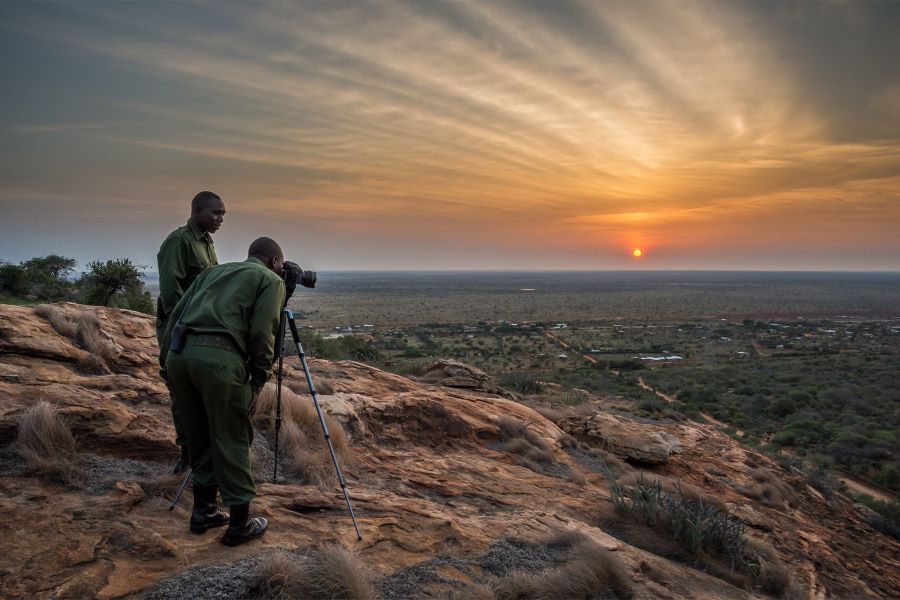
Launched in 2011, the project covers more than 500,000 acres of dryland forest and rangeland in the Kasigau Corridor, an ecologically sensitive zone linking Tsavo East National Park and Tsavo West National Park.
Wildlife Works promotes the initiative as a community-centred conservation model, combining forest protection, ranger employment, education support and water programmes with carbon revenue generated from international buyers, including Shell, Netflix, Microsoft and McKinsey & Company.
However, a joint investigation first published in 2023 by the Kenya Human Rights Commission and the Dutch research organisation SOMO exposed what it described as a long-standing culture of sexual exploitation and intimidation at the Kasigau project.
The report was based on in-depth testimonies from 31 current and former employees and community members and covered incidents allegedly committed between 2011 and 2023. Most of the victims were women employed as rangers, administrative officers and community liaison staff. Several described being pressured into sexual relationships by supervisors, facing retaliation after rejecting advances, and being denied promotions, training opportunities or continued employment.
Community women who interacted with the project through firewood collection and outreach programmes also reported humiliation, coercion and, in some cases, physical assault. One survivor told investigators that senior staff routinely used official vehicles and work assignments to isolate women and make sexual demands. Another described a workplace in which “refusing meant your contract would quietly disappear”.
The report further documented allegations of attempted rape, persistent unwanted touching and sexually degrading language, creating what investigators described as a “climate of fear” in which victims felt unsafe to report abuse. The situation was compounded by the extreme economic vulnerability of surrounding communities, where formal employment opportunities are scarce, and project jobs are widely viewed as a lifeline.
In its assessment, the KHRC and SOMO concluded that a pattern of “sextortion” – sexual demands in exchange for job security or access to benefits – had become embedded in parts of the project’s internal culture.
Three years after the initial findings were compiled, The Weekly Vision has spoken to sources with direct knowledge of the project who say that, although some reforms have been introduced, the personal and institutional damage remains profound.
A former employee, who requested anonymity for fear of reprisals, told this newspaper:
“The training sessions came too late for many of us. Families were torn apart, and trust in the company is shattered. People still fear being labelled troublemakers.”
That testimony echoes a statement recorded in the 2023 investigation by a male employee who said he would never allow his wife or sisters to work at the project because of what he described as the “lifelong consequences” faced by victims.
In a follow-up briefing issued in April 2024, the KHRC and SOMO sharply criticised the global carbon certification system, arguing that auditing processes had failed to detect serious human-rights violations. In particular, the organisations accused the international carbon standards body Verra of effectively “green-lighting abuse” by certifying the project despite repeated warning signs raised by staff and community members.
Verra, which oversees the world’s largest voluntary carbon standard, confirmed in February 2024 that it had completed a formal review of the Kasigau project. The organisation stated that Wildlife Works had taken remedial action, including the dismissal of staff found to have engaged in misconduct, the introduction of gender-sensitivity training, and the establishment of anonymous grievance and reporting mechanisms.
However, rights organisations argue that participation in internal investigations remains low, and that fear of retaliation and social isolation continues to discourage survivors from coming forward.
Wildlife Works has acknowledged that serious failures occurred. Following publication of the 2023 investigation, the company suspended three senior employees and commissioned an independent inquiry by a Kenyan law firm. The investigation substantiated allegations of misconduct against two staff members and found that leadership failures had contributed to a culture of intimidation. The company subsequently dismissed its head of security and its human resources manager.
In a public response, Wildlife Works president Mike Korchinsky apologised to victims and said the organisation was “deeply sorry for the harm suffered by staff and community members”. He announced the formation of a gender-equity task force, revisions to internal disciplinary procedures and new safeguarding policies for field operations.
Despite these assurances, the project’s commercial relationships remain largely intact. Carbon credits generated in Kasigau continue to be traded on the voluntary market, and buyers have not publicly disclosed whether they intend to suspend or terminate their purchasing arrangements.
Shell has previously confirmed that it reviewed the allegations and was awaiting the outcome of internal and certification-body processes. Netflix and Microsoft have issued no public statements on the matter.
For governance and human-rights advocates, the silence of major buyers highlights a structural weakness in the voluntary carbon market, where environmental claims are often prioritised over labour standards and community protection.
In Kenya, the KHRC is now calling for a fully independent public inquiry and stronger regulatory oversight of large-scale conservation and carbon projects, including mandatory human-rights audits and survivor-compensation frameworks. The Commission has also urged closer supervision by the National Environment Management Authority, warning that environmental licensing should not be separated from social and labour safeguards.
As Kenya increasingly positions itself as a regional hub for green investment and nature-based climate solutions, the Kasigau case has become a defining test of whether sustainability can truly coexist with justice and corporate responsibility.
With the global carbon market expected to expand rapidly ahead of new international climate commitments in 2026, a central question remains unresolved in Taita Taveta: have the structural conditions that enabled abuse been dismantled, or have they merely been repackaged under new policies and public-relations reforms?
For the women who worked in the forests and offices of Kasigau, the promise of environmental protection will remain incomplete until accountability, compensation and lasting safety are guaranteed.
[/full]