In the sun-kissed hills of the Karamoja district in northern Uganda, where natural beauty meets profound hardship, the climate crisis is quietly stealing childhoods. Yet, amid these challenges, stories of resilience and collective hope remind us that a brighter future remains within reach for these young lives
By John Omondi
Erick Ekeno, a resident of Moroto town in northern Uganda, laments the lack of effective intervention by government and aid agencies, leaving the people of Karamoja heavily dependent on food aid. “For how long will Karimojong women and girls remain on the streets of these cities as beggars and prostitutes?” he asks. “Something must be done now if we are to restore our traditional way of life.”
Travelling through Karamoja’s Napak, Abim and Kotido districts, the striking beauty of the landscape stands in stark contrast to the grim accounts of its inhabitants. Conversations with local leaders, teachers and families reveal a worsening, climate-induced humanitarian crisis. Girls, some as young as ten, are being withdrawn from school by their parents and sent to hawk confectionery in Kampala, while boys are dispatched to work in quarries in nearby villages. Others migrate further afield to cities such as Nairobi, drawn by the promise of better pay.
For Naretoi, Nairobi represents opportunity. Her determination to find work in the Kenyan capital was inspired by her friend Nadome’s widely shared “rags to riches” story. It is a familiar narrative across the region: school-age girls leaving home in search of menial jobs, hoping to secure a better future.
Many end up in Eastleigh, a bustling Nairobi suburb known for its vibrant Somali business community. With demanding schedules, many households rely on domestic workers. However, due to Kenya’s relatively strong education system, bolstered by the introduction of free primary education under former President Mwai Kibaki, many Kenyan girls pursue formal employment rather than domestic work.
This has created demand for cheaper labour from neighbouring regions. Consequently, many employers turn to girls from Karamoja, fuelling a steady flow of young migrants seeking work as househelps. This trend has contributed to a troubling exodus of vulnerable girls escaping poverty at home, only to face exploitation abroad.
According to the Uganda National Household Survey (2022), Karamoja records the highest prevalence of child trafficking in the country. Many trafficked children are subjected to forced labour and sexual exploitation in Nairobi, Kampala and other urban centres. The report further indicates that 56 per cent of children are engaged in hazardous labour, including street begging, domestic work, bonded labour, mining, charcoal burning and agricultural work.
[Photo: Courtesy]
At the heart of the crisis lies food insecurity, worsened by prolonged drought. Families are often left with impossible choices. “I send my children to work so we can eat,” one mother admits, echoing a widespread desperation. For teenage girls, the situation is particularly dire, as many are pushed into exploitative labour to support their households.
According to UNICEF’s Children’s Climate Risk Index, Uganda is classified as a high-risk country, with over 70 per cent of the population affected by food shortages driven by drought, flooding and land degradation. In Karamoja, these environmental shocks have devastated agriculture and traditional pastoral livelihoods.
Education, once seen as a pathway out of poverty, is increasingly out of reach. Hunger keeps children away from school, while struggling parents regard child labour as a necessary, if troubling, survival strategy. Even rescued children who return to school face new obstacles. One headteacher noted that without reliable access to water, some may ultimately be forced back onto the streets.
UNICEF reports that population growth, recurring crises, extreme poverty and weak social protection systems have pushed an additional 17 million children into labour across sub-Saharan Africa in the past four years.
The Durban Call to Action, adopted at the Fifth Global Conference on the Elimination of Child Labour in 2022, was designed as a roadmap to combat the crisis through stronger legal frameworks, universal access to education and poverty reduction. However, the International Labour Organisation (ILO) warns that economic growth has neither been sufficient nor inclusive enough to ease the pressures driving families towards child labour.
Despite the bleak outlook, there are signs of progress. In Napak, a recent multi-sectoral engagement brought together community leaders, local government officials, the Ministry of Gender, Labour and Social Development, and development partners such as Woord en Daad, Hope for Justice and TUNADO to tackle child labour.
Legal frameworks are in place, alongside government initiatives such as the Uganda National Action Plan on the Elimination of Child Labour and the Third Karamoja Integrated Development Plan (KIDP III). Programmes funded by the European Union, including the Prevention and Restoration of Exploited Children (PREC) project, as well as support from Irish Aid, are making inroads.
Yet much more remains to be done. Stronger enforcement, sustainable livelihood programmes, improved access to education, and robust child protection services are essential. The time to act is now: policymakers, communities, and international partners must urgently unite and commit to concrete, coordinated actions to lift Karamoja’s children out of climate-driven poverty and ensure they reclaim their futures.
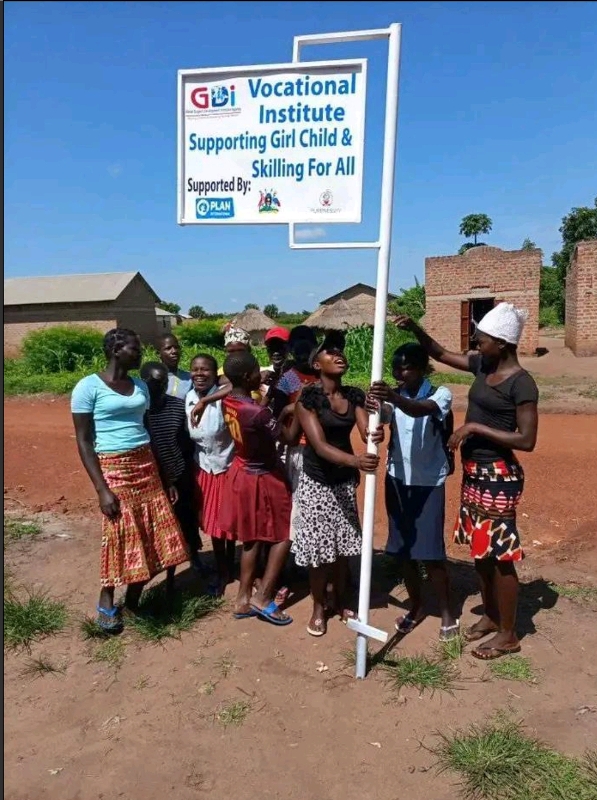
Ken Owani, a human rights activist and director at GDI-Uganda, emphasised that to truly change Karamoja’s future, a coordinated, urgent, and sustained effort from all levels, local, national, and international, is needed. Only with immediate advocacy, stronger enforcement, and expanded access to education can the region guarantee a childhood free from the burdens of labour.