Despite the appearance of honouring Dr Ida Odinga’s service, the nomination is widely seen as a calculated political strategy. Set against internal realignments within the Orange Democratic Movement (ODM) after Raila Odinga’s death, critics contend that Ruto’s decision prioritises strengthening alliances, containing ODM dissent, and positioning himself for 2027 over environmental diplomacy
By TWV Political Desk
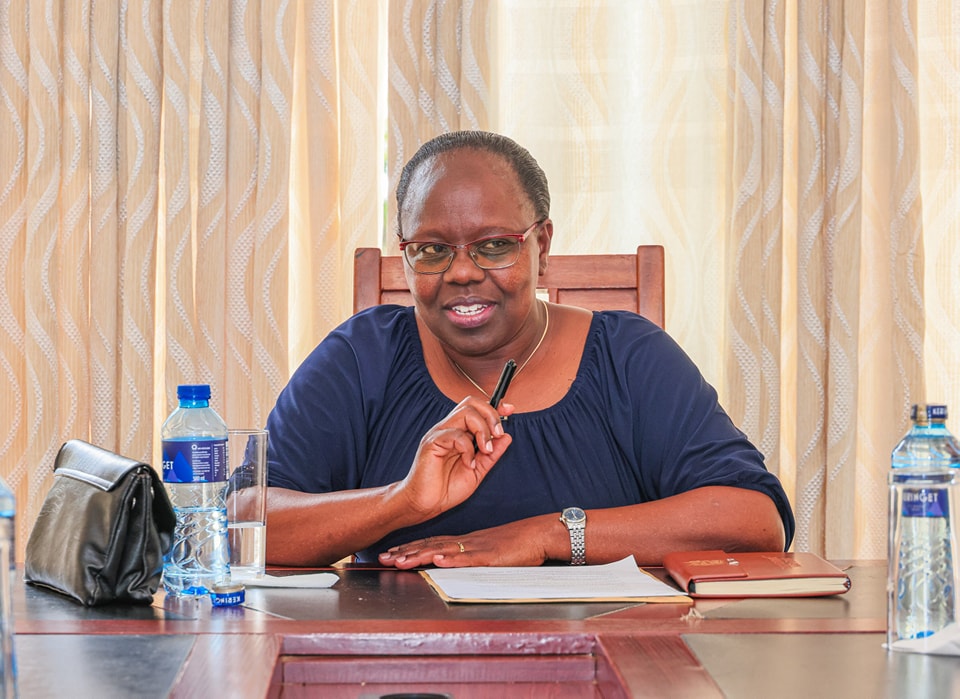
President William Ruto’s nomination of Canon Dr Ida Betty Odinga as Kenya’s Ambassador and Permanent Representative to the United Nations Environment Programme (UNEP) on 23 January 2026 has sent ripples across the country’s political landscape.
If approved by the National Assembly, Dr Odinga would replace Ababu Namwamba, who has been reassigned as Kenya’s High Commissioner to Uganda. On the face of it, the appointment appears to recognise Dr Odinga’s long record of public service, marked by decades of advocacy for women’s empowerment, social justice and community development.
Despite the appearance of honouring Dr Odinga’s service, the nomination is widely seen as a calculated political strategy. Set against internal realignments within the Orange Democratic Movement (ODM) after Raila Odinga’s death, critics contend that Ruto’s decision prioritises strengthening alliances, containing ODM dissent, and positioning himself for 2027 over environmental diplomacy.
Once a formidable opposition force under Raila Odinga, ODM is now contending with deep internal fractures. Raila’s death left a significant leadership vacuum, intensifying tensions between party elders and a younger, more assertive generation that is increasingly resistant to accommodation with the ruling establishment.
Siaya Senator Dr Oburu Oginga, Raila’s elder brother and the party’s current leader, has been tasked by the Central Management Committee to lead pre-election negotiations with President Ruto’s United Democratic Alliance (UDA). The prospect of a coalition to back Ruto’s re-election, however, has sparked sharp resistance within ODM.
East African Legislative Assembly MP Winnie Odinga and Raila Odinga Jr have emerged as vocal critics of any hurried pact with UDA, insisting that ODM must retain its independence. These internal rifts spilled into the open during a rally at Kamukunji Stadium in Kibra a week ago, where Winnie Odinga publicly questioned both the pace of the talks and Dr Oburu’s leadership.
Kisumu Woman Representative Ruth Odinga echoed those concerns, defending Winnie’s position and accusing party elders of attempting to hijack ODM in the immediate aftermath of Raila’s death. “Baba died just the other day. What is the hurry? Let us talk first and move forward together,” she said, likening the situation to opportunistic drivers seizing the steering wheel after the driver’s sudden departure.
Ruth Odinga called for nationwide town hall meetings to allow party members to collectively shape ODM’s future, warning that sidelining or expelling dissenting voices, such as Nairobi Senator Edwin Sifuna or Embakasi East MP Babu Owino, could hollow out the party and trigger a damaging implosion.
President Ruto’s nomination of Dr Odinga should be viewed as a significant move within Kenya’s evolving political landscape. Responding to Gen Z-led 2024 protests and the need for a stable government, Ruto acts to forge strategic ties with ODM and incorporate its leaders, demonstrating an overarching effort to maintain political cohesion.
Political analysts describe the President’s latest move as part of a wider “chess game” aimed at sustaining these delicate alliances amid ODM’s internal turbulence. By elevating Ida Odinga, a senior ODM figure and a powerful symbol of continuity within the Odinga family, to a prestigious diplomatic post, Ruto appears intent on maintaining cohesion within the family and averting a fracture of ODM that could erode his support in Luo Nyanza.
While some interpret the nomination as a gesture of respect and reconciliation, it is also consistent with President Ruto’s broader strategy of co-opting influential opposition figures. Previous appointments of leaders such as Hassan Joho, Opiyo Wandayi, Wycliffe Oparanya and John Mbadi are often cited as evidence of a deliberate effort to neutralise potential political threats by drawing them into the government fold.
As Parliament prepares to vet Dr Odinga’s nomination, the decision is likely to continue fuelling debate, not only about Kenya’s environmental diplomacy, but also about the shifting power dynamics within ODM and the strategic calculations shaping the road to 2027.