By Weekly Vision Political Desk
Kenya’s electoral commission has raised a fresh alarm over its financial health, warning Members of Parliament that a growing burden of unpaid legal fees is threatening its ability to prepare adequately for the next general election.
Appearing before legislators during the 2026 National Assembly retreat in Naivasha, the Independent Electoral and Boundaries Commission (IEBC) disclosed that it is sitting on outstanding legal bills amounting to KSh 3.8 billion, accumulated over more than a decade.
According to documents submitted to Parliament, the debts date back to 2013, when the commission began relying heavily on external lawyers to defend itself in election-related litigation. The commission says the scale of court disputes has expanded sharply with every election cycle, forcing it to outsource legal services almost permanently. On average, IEBC handles more than 100 disputes per election cycle, covering party primaries, parliamentary contests, gubernatorial races and presidential petitions.
Yet the institution currently has only four in-house advocates, a staffing level the commission admits is grossly inadequate.
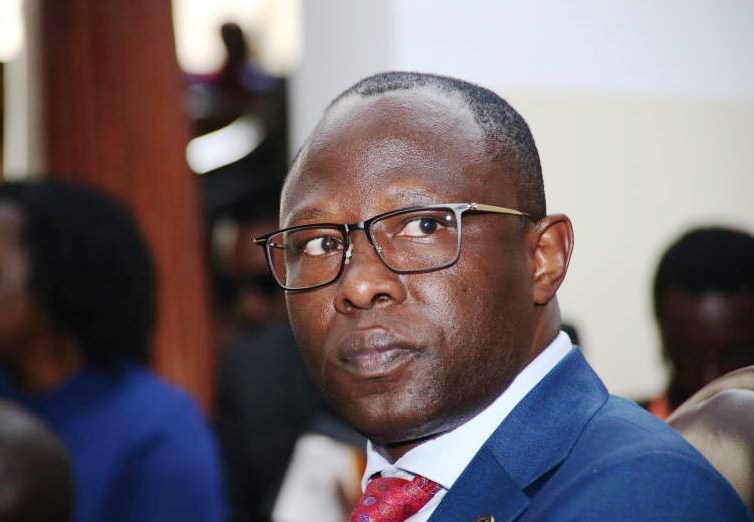
IEBC chairperson Erustus Ethekon told MPs that the unpaid bills have created a ripple effect across the institution. The commission is increasingly struggling to attract suppliers, procurement costs are rising, and its credibility as a public institution has been weakened. The unresolved obligations, he said, have also reduced the commission’s operational flexibility and undermined its financial independence as guaranteed by the Constitution.
More critically, IEBC maintains that the growing financial pressure is now directly affecting the delivery of its constitutional mandate. While the pending bills have been submitted to the Pending Bills Verification Committee, IEBC is appealing for urgent parliamentary intervention.
The committee has already recommended payment of KSh 255 billion out of the total verified claims of KSh 606 billion across the government. IEBC wants its verified obligations prioritised. Ethekon urged Parliament to facilitate the immediate settlement of confirmed bills and to support what he termed a progressive closure of the commission’s 2027 election funding gap.
He argued that predictable and timely financing of the electoral body should be viewed not as routine expenditure, but as a strategic investment in democratic stability. The commission attributes most of the accumulated legal costs to the growing volume and complexity of election petitions. IEBC disclosed that it spent KSh 1.94 billion on legal services during the 2022 General Election alone.
A substantial portion of this expenditure went towards defending the presidential petition filed by Azimio La Umoja leader Raila Odinga, who challenged the declaration of President William Ruto as the winner of the August 2022 poll. The commission paid KSh 569.3 million to 38 lawyers who handled the case.
Additional funds were spent on petitions involving governors, senators, women representatives, Members of County Assemblies and party list disputes across several counties.
In a notable disclosure, the commission told MPs that the Attorney-General has, in some cases, taken positions that differ from those of IEBC, limiting the effectiveness of its legal representation. This, the commission argues, has further increased its dependence on private advocates and added to the ballooning legal costs.
Beyond litigation, IEBC says inadequate budgetary allocations have stalled post-election legal reforms. The commission noted that previous recommendations require electoral reforms to be completed at least two years before a general election, a timeline it says is now under serious threat.
To address this, IEBC is calling on Parliament to fast-track pending electoral legislation and to enact a long-awaited campaign financing law, which would enable the commission to regulate election spending more effectively. Even as it grapples with financial constraints, the commission has confirmed that it will roll out an enhanced mass voter registration exercise beginning 29 March 2026.
The exercise will be conducted in 27,000 registration centres nationwide and forms part of a new cycle-based approach to election preparedness introduced after the 2022 General Election.
IEBC aims to expand the voter register from 22.1 million to approximately 27.4 million voters. At the heart of IEBC’s appeal is a broader message to lawmakers: without urgent financial intervention and legislative support, the commission risks entering the 2027 election cycle burdened by unresolved debts, delayed reforms and constrained operational capacity.
The commission insists that unless Parliament treats electoral financing as a national priority, Kenya’s democratic infrastructure may be weakened at a time when public confidence in institutions is already under pressure.