At the centre of the dispute is the alleged failure by management to fully implement the Return-to-Work Formula (RTWF) signed on 5 November 2025. The union states that the Government disbursed KSh 74.1 million to settle staff arrears, but the university paid out only KSh 41.9 million, leaving a significant shortfall
To unlock the full article:
Choose one of the options below:
- Ksh 10 – This article only
- Ksh 50 – Access to ALL articles on the site (full site access)
- Ksh 300 – Monthly subscription
- Ksh 2340 – Yearly subscription (10% off)
By The Weekly Vision Reporter
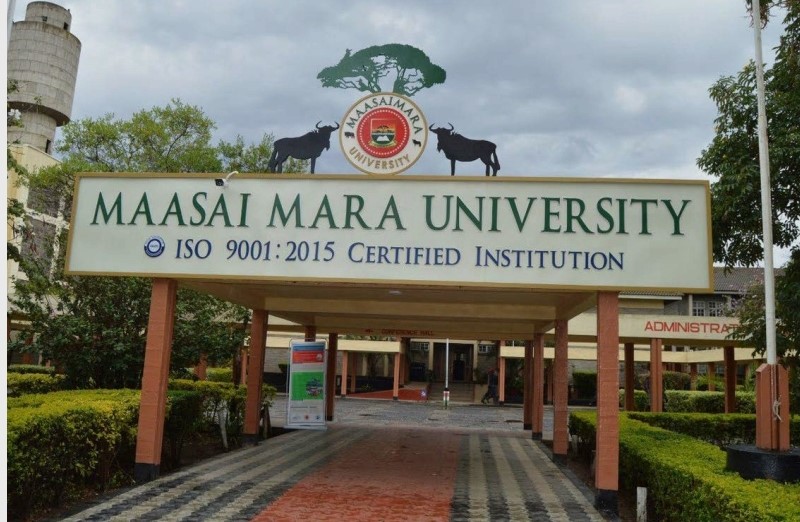
Maasai Mara University is facing renewed labour unrest after the University’s Academic Staff Union (UASU) issued a formal seven-day strike notice, escalating a long-running industrial dispute. In a notice dated 12 January 2026 and addressed to the Vice-Chancellor, the UASU Maasai Mara University Chapter outlines a catalogue of unresolved grievances which, according to the union, have accumulated over several years despite repeated engagements with university management.
At the centre of the dispute is the alleged failure by management to fully implement the Return-to-Work Formula (RTWF) signed on 5 November 2025. The union states that the Government disbursed KSh 74.1 million to settle staff arrears, but the university paid out only KSh 41.9 million, leaving a significant shortfall.
UASU claims that management initially acknowledged receipt of the funds and committed to full payment during verification sessions held in December 2025, only to later reverse its position during meetings of the Joint Labour Implementation Committee (JLIC), resulting in underpayment of staff arrears.
Beyond the RTWF, the union alleges that a total of KSh 102.7 million in Collective Bargaining Agreement (CBA) funds, covering the 2013–2017 and 2017–2021 cycles, was disbursed in the 2020/2021 financial year but never disclosed to the union. Despite these disbursements, lecturers reportedly continued to earn salaries based on outdated pay scales, raising concerns over accountability and transparency in the management of CBA funds.
The strike notice also cites the failure to remit statutory and third-party deductions, including pension, SACCO and bank loan deductions, for several months in late 2025. UASU warns that delayed remittances have exposed staff to penalties and reputational risk with lenders, while management has allegedly failed to honour commitments to establish salary reserve mechanisms to cushion staff against payment delays.
The union further accuses the University of failing to review bank–employee memoranda of understanding to ensure that penalties arising from late remittances are borne by the employer rather than individual staff members.
Another major flashpoint is the failure to negotiate and implement the university’s internal CBA for the 2013–2017 periods. UASU says management has persistently failed to budget for CBA obligations and has instead pushed for a “zero” CBA devoid of monetary benefits, contrary to established practice across public universities.
The union claims that gratuities and gratuity arrears spanning three CBA cycles, 2013–2017, 2017–2021 and 2021–2025, remain unpaid, despite agreements reached in March 2025 and allocations approved through JLIC processes.
Lecturers in the School of Health Sciences recruited between 2023 and January 2025 are said to be owed risk and extraneous allowance arrears. Meanwhile, Temporary Tutorial Fellows have yet to be regularised into approved CBA designations, despite internal advertisements issued nearly a year ago.
The union has also raised concerns over unpaid part-time teaching dues dating back as far as 2015, alongside unilateral changes to part-time teaching terms approved through Senate resolutions. These changes allegedly reduced rates without union consent and left multiple staff appeals unresolved.
UASU further accuses the University of failing to provide adequate medical and insurance cover, including Work Injury Benefits Act (WIBA) cover, Group Personal Accident insurance and Group Life Assurance. Chronic underfunding of medical services, estimated at about KSh 40 million annually, has reportedly left staff unable to access essential care, while service providers remain unpaid.
Among the most serious allegations are claims that management has failed to reinstate two lecturers, Prof. Obere and Dr Okumu Biketi, despite the conclusion of their court cases and explicit court orders barring further disciplinary action. The union says the continued suspension of the two academics amounts to defiance of lawful court orders.
UASU has warned that failure by management to engage meaningfully and provide clear remedial timelines within seven days will trigger escalation through statutory labour mechanisms.
The dispute places Maasai Mara University under renewed scrutiny at a time when public universities are already grappling with funding constraints, governance challenges and strained labour relations. Beyond the immediate threat of industrial action, the allegations raise broader questions about financial accountability, compliance with labour laws, and respect for negotiated agreements and court rulings within public institutions.
For staff, the dispute centres on unpaid wages, benefits and dignity at work. For students and taxpayers, it is a test of whether governance failures will continue to undermine stability and service delivery at a public university entrusted with public funds.
As of mid-January 2026, university management had not publicly responded to the detailed claims. Whether engagement follows or the dispute escalates into strikes and litigation may determine not only labour peace at Maasai Mara University, but also public confidence in how universities manage resources and treat their academic staff.
[/full]