Several analysts and senior advocates have suggested that Mr Peter Wanyama’s campaign was significantly hampered by persistent allegations of alignment with, or sympathy towards, the administration of President William Ruto. Although Mr Wanyama repeatedly and publicly denied any form of political sponsorship or affiliation, his rivals frequently raised questions about his independence during campaign forums and debates
By The Weekly Vision Reporter
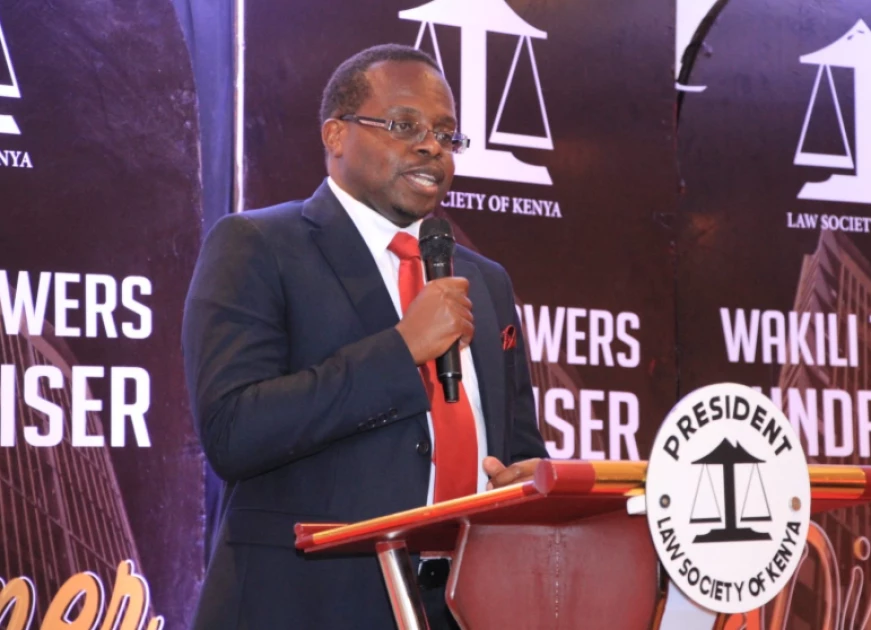
Senior Counsel Charles Kanjama was elected the 52nd President of the Law Society of Kenya (LSK) last evening, securing a decisive victory in elections following a keenly contested race centred on judicial independence, professional reform, and the rule of law.
Official results released after the tallying of votes from polling centres nationwide showed Mr Kanjama garnering 3,728 votes. He defeated his closest rival, Peter Wanyama, who received 2,616 votes, while the outgoing vice-president, Mwaura Kabata, finished third with 2,086 votes.
The elections, supervised by the Independent Electoral and Boundaries Commission (IEBC), were conducted across more than 50 designated centres, with advocates voting for the presidency, vice-presidency and other council positions for the 2026–2028 term. More than 18,000 practising advocates were eligible to vote.
Mr Kanjama, a seasoned litigator and senior counsel known for his measured courtroom style and commentary on constitutional matters, will succeed Faith Odhiambo, who has held the presidency since March 2024. Ms Odhiambo, the second woman to lead the LSK, earned public recognition for her vocal defence of protesters’ rights during last year’s anti-finance bill demonstrations and for championing members’ welfare.
In a statement after the declaration of the results, Mr Kanjama pledged to unite the profession. “All the polling stations have shown that voters have chosen Charles Kanjama, that is me. I will work with everyone, supporters and rivals alike, to advance the interests of Kenyan lawyers and Kenyans as a whole,” he said. Teresia Wavinya Nicholas will serve as deputy president.
The campaign period was marked by intense debate over the LSK’s role in safeguarding judicial independence and addressing internal challenges, including reports of sexual harassment within the profession. Campaign expenditure disclosures showed notable disparities, with Mr Wanyama reported to have spent KSh12 million, compared with KSh6 million by Mr Kanjama and KSh5 million by Mr Kabata.
However, several analysts and senior advocates say Mr Wanyama’s campaign was also weighed down by persistent claims that he was aligned with, or sympathetic towards, the administration of President William Ruto.
Although Mr Wanyama publicly denied any political sponsorship, rivals repeatedly questioned his independence during campaign forums, arguing that the LSK must remain firmly detached from the Executive. The allegations of proximity to State House, which circulated widely on legal social media platforms and within regional bar caucuses, are believed to have weakened his appeal among lawyers who viewed the election as a referendum on the society’s ability to stand up to political pressure ahead of the 2027 General Election. Outgoing president Ms Odhiambo congratulated her successor, describing his victory as “resounding” and expressing confidence in his leadership.
The result signals a shift in the society’s direction, with observers noting that Mr Kanjama’s emphasis on institutional restraint, consensus-building and a non-confrontational leadership style resonated with a large section of the electorate.
The LSK, as the country’s premier professional body for advocates, plays a central role in setting ethical standards, pushing for legal and judicial reforms, and engaging the State on matters of public policy and constitutional governance.
Mr Kanjama’s two-year term takes effect immediately, as the society prepares for heightened public scrutiny in the run-up to the 2027 elections and renewed efforts to safeguard constitutional values.