By The Weekly Vision Reporter
Top Kenyan referee Stephen Yiembe was among the match officials caught up in chaotic scenes that marred the Africa Cup of Nations (AFCON) final between hosts Morocco and Senegal in Rabat on Sunday night.
The controversy erupted deep into stoppage time when centre referee Jean-Jacques Ndala awarded a 98th-minute penalty after being advised by the Video Assistant Referee (VAR) to review defender El Hadji Malick Diouf’s challenge on Morocco forward Brahim Díaz at the pitchside monitor. Mr Yiembe was part of the VAR team whose intervention led to the decision and the subsequent unrest.
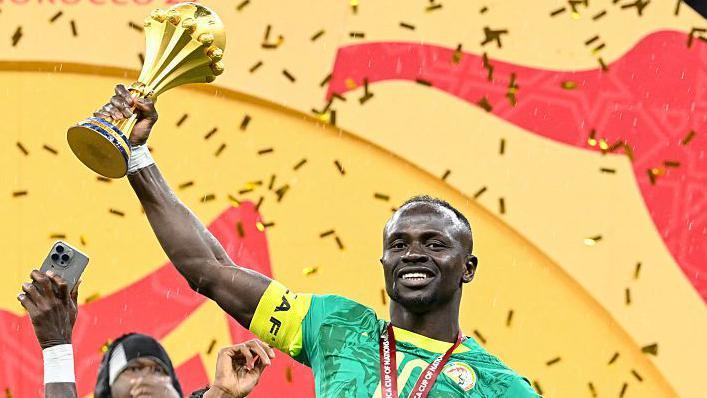
Tempers flared immediately, with Senegal head coach Pape Thiaw, still angered by an earlier decision to disallow a Senegal goal, ordering his players off the pitch in protest, according to a BBC report. Former Liverpool forward Sadio Mané, however, remained on the field, urging his team-mates to return and complete the match.
After a delay of about 17 minutes, the players eventually resumed play. Díaz, the tournament’s top scorer with five goals, stepped up to take the penalty but saw his attempted ‘Panenka’ saved comfortably by Senegal goalkeeper Édouard Mendy. Referee Ndala then blew the final whistle at the end of regulation time.
The decisive moment came in extra time, when Villarreal midfielder Pape Gueye scored in the fourth minute to secure Senegal’s second AFCON title in five years.
Speaking after the match, Morocco coach Walid Regragui condemned Senegal’s actions as “shameful” and said they did not “honour Africa”. Mr Thiaw’s post-match media briefing was cancelled following a disturbance in the press room, although he later spoke to BeIN Sport, where he admitted that his reaction had been wrong.
“We didn’t agree, and I don’t want to go over all the incidents. I apologise to football,” Thiaw said. “After reflecting on it, I made them come back on the pitch. You can react in the heat of the moment. We accept the referee’s errors. We shouldn’t have done it, but it’s done, and now we apologise to football.”
The Senegal coach had been particularly incensed by the earlier disallowed goal by Crystal Palace forward Ismaila Sarr, whose close-range effort was ruled out for a foul by Abdoulaye Seck on Achraf Hakimi in the build-up. The subsequent penalty decision compounded his frustration.
Several Senegal players followed Thiaw’s instruction to leave the pitch, while some supporters reportedly threw objects and attempted to invade the field. Díaz, who was substituted after Gueye’s winning goal, cut a dejected figure as Morocco missed the chance to claim a first AFCON title since 1976.
Mané later urged calm and reflection, stressing the importance of protecting the image of African football. “Football is something special, and the world was watching. We have to give a good image,” he said. “I would rather lose than see this kind of thing happen to our football.”
The officiating attracted strong criticism from sections of the international media. Britain’s Daily Mail described the refereeing as “farcical” and the penalty as “soft”, arguing that VAR decisions overshadowed what had been an entertaining final. The report said the match had “descended into farce” following what it termed an “extremely soft stoppage-time VAR decision”, raising questions about the standard of officiating at the tournament.
Despite the controversy, the match was ultimately decided on the pitch. Observers noted, however, that the high-stakes nature of the final demanded the highest levels of consistency and clarity from match officials.
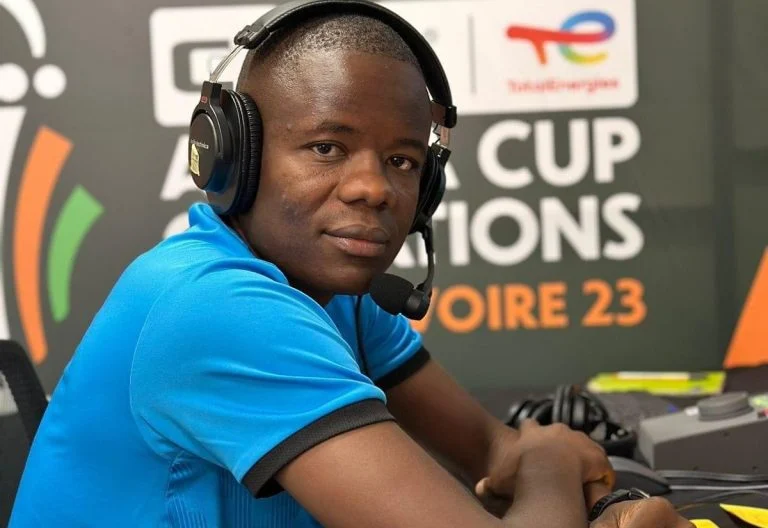
Mr Yiembe was one of four Kenyan referees selected for AFCON 2025, alongside Peter Waeru Kamaku, Dickens Mimisa and Gilbert Cheruiyot. During the tournament, he officiated in several high-profile matches, including Cameroon’s Round of 16 victory over South Africa and the semi-final clash between Nigeria and Morocco, where he also served as a VAR official.