By The Weekly Vision Court Reporter
The death last evening of Dr Job Obwaka, former Board Chairman of The Nairobi Hospital, has ignited a national debate over law enforcement officers’ conduct in handling medically vulnerable suspects.
Dr Obwaka, 83, died 46 days after a controversial arrest and court appearance during which he collapsed in full view of judicial officers. A post-mortem examination is now underway.
The veteran medic was arrested on Saturday, 14 March 2026, by officers from the Directorate of Criminal Investigations outside his clinic at Nairobi’s NSSF Building. He was detained at Muthaiga Police Station over the weekend. Relatives maintain that Dr Obwaka had a known heart condition requiring regular monitoring and medication. The family further stated that anticipatory bail orders had been secured before his arrest, but were not honoured by the authorities.

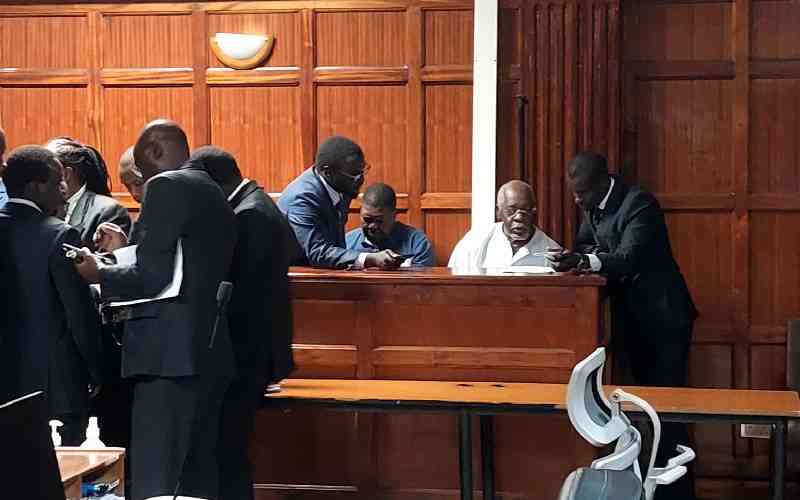
On Monday, 16 March, after two nights in custody, he was presented before the Milimani Law Courts. During proceedings, he reportedly developed breathing difficulties and collapsed, prompting an emergency evacuation by paramedics. He was subsequently charged with the offence of conflict of interest, failure to file financial statements, and the alleged loss of Sh4.8 million linked to hospital operations. He denied all charges and was released on a Sh5 million bond.
Some insiders at Nairobi Hospital and medical stakeholders say the criminal case emerged amid disagreements over the hospital’s leadership and direction, including resistance to a potential buyout by powerful government figures. Sections of the medical community expressed alarm over the handling of the case.
The Kenya Medical Association, alongside other professional bodies, raised concerns about what they described as heavy-handed treatment of an elderly practitioner, with some members warning of the potential misuse of law enforcement mechanisms in institutional conflicts. Dr Obwaka’s death has now sharpened focus on a series of unresolved questions, whether due process was fully observed at the time of his arrest, whether his medical condition was adequately considered while in custody, and whether the stress or conditions of detention contributed to his collapse and subsequent death.
Health Cabinet Secretary Aden Duale issued a condolence message praising Dr Obwaka’s contributions to maternal and reproductive health, mentorship, and medical standards, while extending sympathies to his family and the wider medical fraternity. However, the message drew significant public criticism on social media, with some Kenyans describing it as tone-deaf in light of the circumstances surrounding the doctor’s arrest and detention.
The sequence of events leading to Dr Obwaka’s death has already sparked a broader national conversation about accountability, the observance of due process, and the humane treatment of elderly and vulnerable individuals within the justice system. Widely regarded as a respected figure in Kenya’s medical sector, Dr Obwaka’s legacy now stands in stark contrast to the circumstances of his final weeks.