By The Weekly Vision Reporter
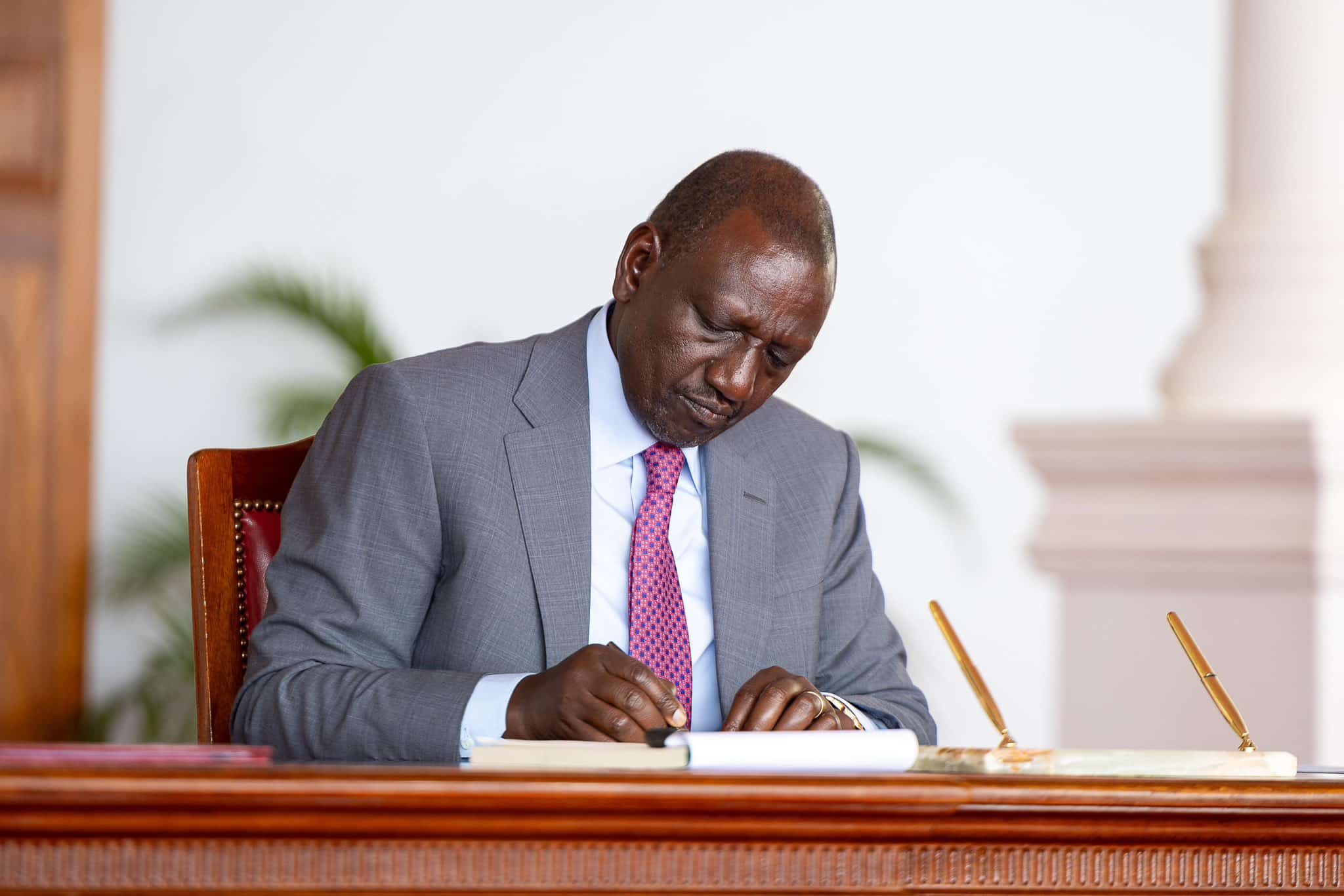
Members of Parliament have fast-tracked legislation to lower fuel prices, with President William Ruto assenting to the Value Added Tax (Amendment) Bill (National Assembly Bill No. 21 of 2026) yesterday, thereby bringing the measure into law.
This legislative action comes at a time of rising global supply pressures linked to instability in the Middle East. By reducing Value Added Tax (VAT) on petroleum products by 50 per cent, from 16 per cent to 8 per cent, the expedited measure paves the way for a reduction in fuel prices, cushioning households and businesses from escalating energy costs.
The Bill, sponsored by Majority Leader Kimani Ichung’wah, was introduced and passed on 16 April 2026 without amendments, following the Executive’s request for urgent intervention to stabilise fuel prices. Under the new law, the reduced VAT will apply for an initial period of 90 days. The Cabinet Secretary for the National Treasury is further empowered to extend the relief for an additional 90 days if necessary, offering flexibility in response to evolving global market conditions.
The law stipulates that the tax cut takes effect from 15 April, with immediate implications for consumers. The government projects that the reduction will lower the price of super petrol and kerosene. Government analysts and National Assembly leadership maintain that the measure is a strategic necessity to avert a cost-of-living crisis.
“An escalation in fuel costs has a knock-on effect on the price of consumer goods and services. This reduction is meaningful and will significantly ease the burden on Kenyan households, particularly in transport and essential commodities,” the brief noted.
The urgency surrounding the Bill was underscored a day earlier, when the Kenya National Chamber of Commerce and Industry called for immediate and coordinated action, including a comprehensive review of fuel taxes and levies, enhanced transparency, and institutionalised public–private sector dialogue. “Kenya cannot continue to manage fuel shocks through short-term measures. Structural reforms are now unavoidable,” said KNCCI CEO K.K. Mutai.
“The private sector stands ready to partner with government to stabilise prices, protect jobs, and safeguard Kenya’s economic competitiveness. The time to act is now,” he added.