The key question remains how the Electoral Commission expected the biometric voter verification system to function without internet access, which had been shut down nationwide by the Museveni-led government. The contradiction has left many observers baffled and raised serious doubts about the preparedness and credibility of the electoral process
By The Weekly Vision Correspondent, Kampala
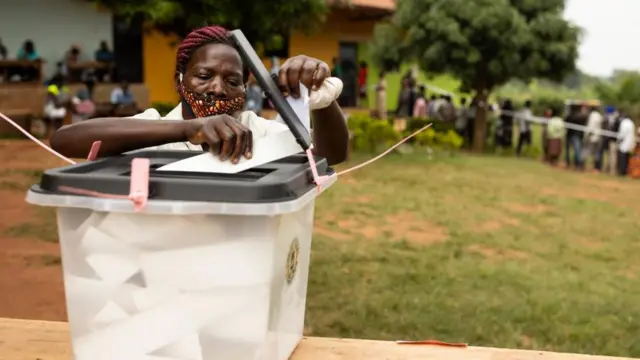
Ugandans queued for hours in intense heat on Thursday to cast their votes in a highly charged election that many fear may mark the country’s last meaningful contest for power. As vote counting stretched into the early hours of Friday, 16 January 2026, provisional results released by the Electoral Commission suggested a familiar outcome. President Yoweri Museveni, who has ruled Uganda since 1986, was leading with between 61 and 75 per cent of the vote from sampled polling stations.
His main challenger, opposition leader and pop star-turned-politician Robert Kyagulanyi, popularly known as Bobi Wine, was trailing with between 19% and 33% of the vote. The opposition has rejected the early figures, alleging widespread irregularities and manipulation.
Biometric voter verification machines reportedly failed at many polling stations, forcing officials to switch to manual verification. This led to long delays, confusion and growing frustration among voters. The key question remains how the Electoral Commission expected the biometric voter verification system to function without internet access, which had been shut down nationwide by the Museveni-led government. The contradiction has left many observers baffled and raised serious doubts about the preparedness and credibility of the electoral process.
“We came here early to vote, but everything is disorganised,” said one voter in Kampala, reflecting a sentiment heard across the country. Compounding these problems was a nationwide internet shutdown imposed on 13 January. Authorities stated that the move was intended to curb misinformation, but critics argue that it was designed to suppress dissent and prevent independent monitoring of the vote. Similar shutdowns were enforced during the 2016 and 2021 elections.
Social media platforms have remained restricted since the last election, limiting the ability of young Ugandans, who make up nearly 80 per cent of the population, to express their views. At the same time, state-controlled media continued to broadcast largely unchallenged official narratives.
Opposition figures and civil society groups have reported other forms of suppression. Campaign rallies were frequently disrupted, polling agents were allegedly expelled from voting centres, and supporters of the National Unity Platform (NUP) reported cases of intimidation and abduction.
Before the internet blackout, Bobi Wine accused authorities of “massive ballot-stuffing” and manipulation of the voters’ register. While these claims have not been independently verified, the opposition has long raised concerns about duplicate names, deceased voters and inflated registers that they say favour the incumbent.
Concerns have also been raised about shrinking civic space. At least ten non-governmental organisations were shut down last week, accused by authorities of threatening national security. Media houses faced tight accreditation rules, limiting independent election coverage.
Allegations of vote-buying have further clouded the process. Opposition leaders claim state resources were used to influence voters in poorer areas. In one constituency, polling stations were reportedly set up on private land linked to the President’s family, raising fears of unmonitored voting.
The international response has been cautious. The Commonwealth has expressed concern over restrictions on freedom of assembly and expression. However, full observer missions from the European Union and the United States were absent, citing unfavourable conditions.
As results continue to emerge, fears are growing that Uganda’s democratic space is steadily shrinking. Recent anti-corruption protests led largely by young people have already been met with a heavy security response.
If President Museveni secures another term, as widely expected, analysts warn of possible unrest. For many Ugandans, this election represents more than a choice of leaders. It is a test of whether the country can still claim a democratic future.
As one activist remarked, “Vote as if it is your last chance, because it may be.”