By The Weekly Vision Reporter
The United Nations Development Programme (UNDP), in partnership with the Panos Institute Southern Africa (PSAf), has officially re-launched iVerify Zambia 2.0, a national fact-checking and response mechanism designed to combat misinformation, disinformation and hate speech, while safeguarding Zambia’s democratic processes ahead of the 2026 General Election.
Originally established in 2021, iVerify Zambia was created to respond to growing threats to the country’s democratic and electoral environment. The platform played a key role in improving public access to verified information, strengthening transparency and enhancing public trust in democratic institutions, while fostering collaboration among media houses, civil society organisations and election management bodies.
However, the rapid evolution of the digital information environment, driven by artificial intelligence, algorithmic amplification, deepfakes, synthetic media and coordinated inauthentic behavior, has significantly increased the scale, speed and sophistication of information manipulation.
The re-engineered iVerify Zambia 2.0 is a sustainable platform that integrates AI-enabled monitoring and early-warning systems with rigorous human verification processes, coordinated response protocols and structured public media literacy interventions.
The platform is implemented under the National Action Coalition on Information Integrity in Elections, which brings together media institutions, civil society organisations, government agencies, digital platforms and development partners in a nationally coordinated response to information threats.
Speaking during the re-launch, Panos Institute Southern Africa Executive Director Vusumuzi Sifile said iVerify Zambia represents a frontline response for identifying falsehoods, verifying claims and promoting a culture of accuracy, accountability and trust. “Everyone has a role to play. Government, cooperating partners, journalists, civil society, regulators, electoral bodies, digital platforms, community radio stations, faith leaders and citizens themselves are all part of the information ecosystem,” he said.
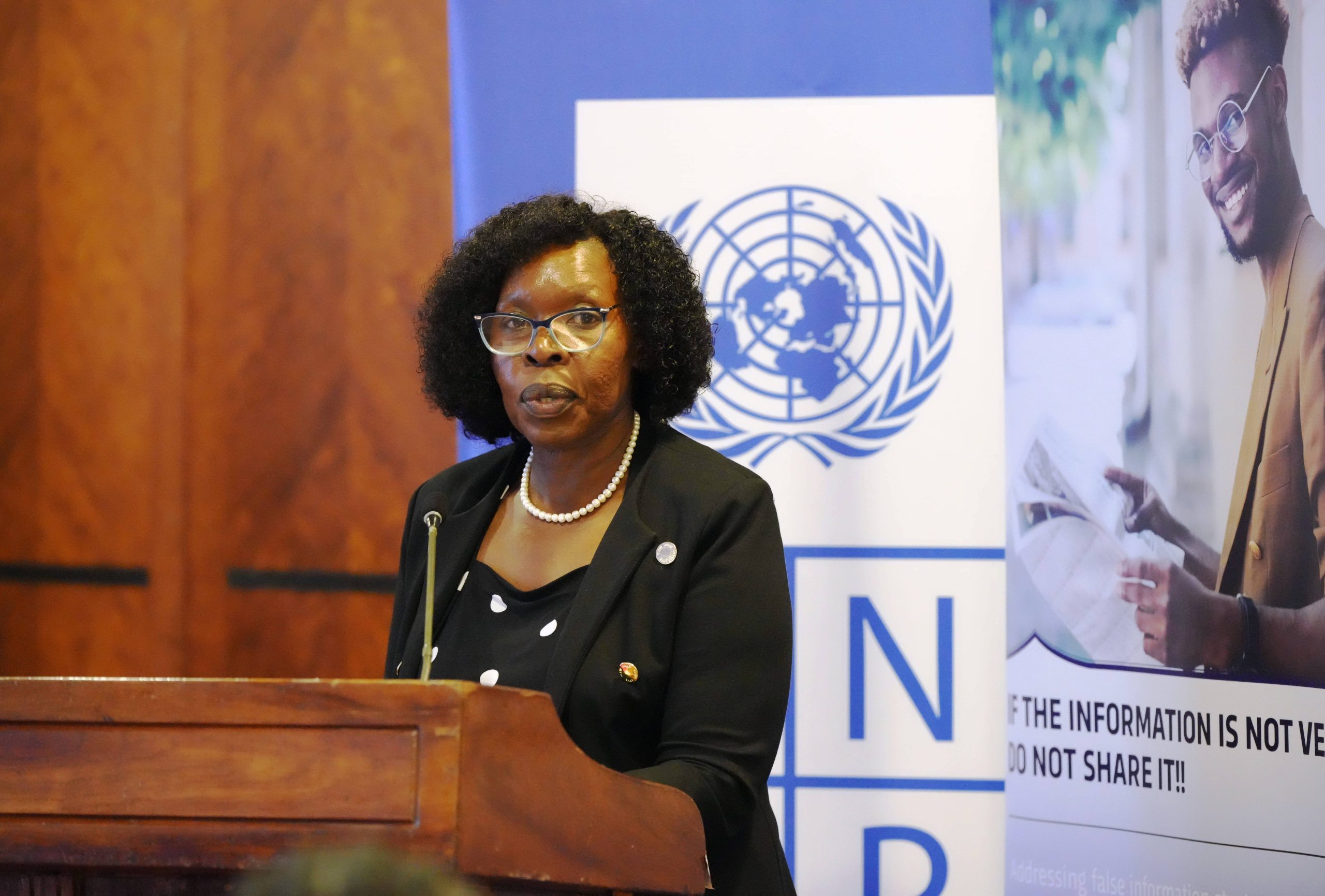
Also speaking at the event, the United Nations Resident Coordinator in Zambia, Beatrice Mutali, said the re-launch acknowledges that today’s information challenges are far more complex than when the mechanism was first introduced. “With the launch of iVerify Zambia 2.0, we recognise that today’s challenges are more complex than those faced five years ago. Artificial intelligence has fundamentally altered the scale, speed and sophistication of information manipulation,” she said.
Ms Mutali noted that hate speech polarises communities and intimidates candidates during elections, as well as historically marginalised groups, including women, young people, persons with disabilities and formerly incarcerated individuals.
“iVerify Zambia creates a shared platform for detection, verification and response. It shifts us from reactive crisis management to proactive risk mitigation,” she said.
She added that as Zambia approaches the 2026 General Elections, the initiative becomes even more critical. “Elections are moments of both opportunity and vulnerability. They allow citizens to exercise their sovereign voice, but they also intensify competition and sharpen narratives—conditions in which misinformation, disinformation and hate speech can flourish,” she said.
UNDP Resident Representative James Wakiaga said safeguarding information integrity goes beyond technology. “Protecting information integrity is a matter of inclusion, equality and safeguarding democratic participation for women, young people and persons with disabilities,” he said.
He added that access to accurate, timely and verified information is essential for public trust, peaceful participation and democratic stability as the country heads towards the 2026 polls.
The Zambian Ministry of Information and Media was represented by Director of Press and Media Morden Mayembe, on behalf of Minister Thabo Kawana.
Mr Kawana, in his remarks delivered by Mr Mayembe, said the success of iVerify Zambia 2.0 would depend on collective action. “It is not a task for government or the media alone. It requires the active participation of civil society, academia, regulators, digital platforms, journalists and ordinary citizens,” he said.
He added that the re-launch comes at a critical moment, as the 2026 General Elections approach, a period traditionally marked by heightened political competition and increased vulnerability to information manipulation.
The initiative is led by the Panos Institute Southern Africa, with support from UNDP and other partners, positioning iVerify Zambia 2.0 as a central pillar of Zambia’s democratic resilience infrastructure, not only for the 2026 electoral cycle, but as a long-term national mechanism for strengthening information integrity.
[/full]