By The Weekly Vision Reporter
Chief of Staff and Head of Public Service Felix Koskei has urged the leadership and staff of the State Departments of Roads and Transport to uphold integrity, accountability, professionalism, efficiency and responsiveness in order to enhance service delivery across the two sectors.
Koskei said these values must be reflected in procurement, project implementation, enforcement and service delivery. He noted that roads and transport systems are not merely infrastructure, but the arteries through which economic activity flows, enabling the movement of people, goods and services across the country.
“Every road constructed, every kilometre maintained, every transport system regulated and every safety measure implemented has a direct impact on productivity, connectivity and national development,” said Koskei.
He further called for a transformation in mindset and attitude among staff, adding that there is an urgent need to shift from routine processes to results, and from activity to impact. “It is not about the number of projects initiated, but the quality, timeliness and reliability of what is delivered,” he said.
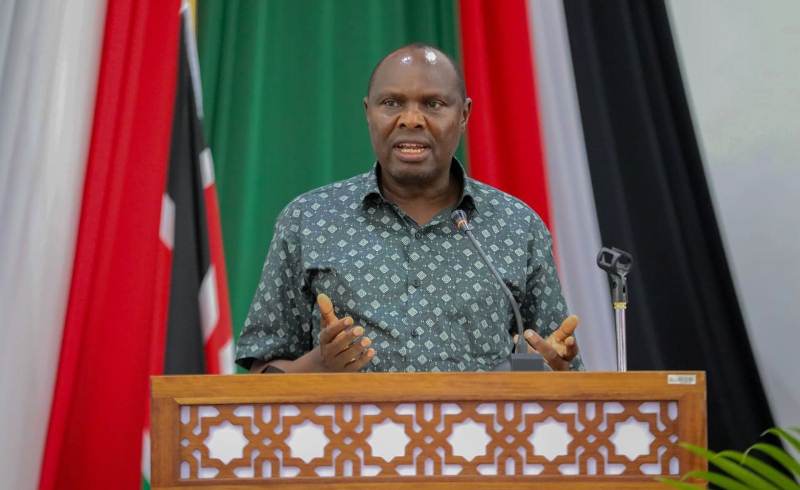
Koskei, who was addressing the leadership and staff of the two State Departments during a virtual engagement, underscored the need to break down institutional silos.
“We must operate as one coordinated system. Planning, construction, maintenance, regulation and enforcement must be aligned. Fragmentation leads to inefficiency and weakens impact,” he added.
On citizen-centred service delivery, Koskei observed that government efforts must be felt through safe roads, orderly transport systems, reduced congestion and reliable services.
He also emphasised prudent management of public resources, noting that funds must be used efficiently, transparently and strictly for their intended purpose. “There must be zero tolerance for wastage, inflated costs or misuse of public funds,” he said, underscoring the importance of strengthening monitoring and evaluation to track progress, assess performance and demonstrate results.
“Kenyans want not just roads built, but roads that last. Not just systems introduced, but systems that work. Not just enforcement policies, but compliance achieved,” he added.
In remarks read on his behalf by Secretary Administration Evans Mutari, Roads Principal Secretary Joseph Mbugua said that over the past three years, the Roads sub-sector has recorded steady progress in executing its mandate. “We have expanded and upgraded approximately 2,700 kilometres of road network to bitumen standards, significantly improving connectivity across the country. This has enhanced access to markets, schools, health facilities and economic opportunities, particularly in underserved regions,” said Mbugua.
He added that several road projects have been completed and commissioned nationwide, marking important milestones in improving mobility and unlocking economic potential. “These include key urban link roads that have eased congestion in major towns, rural access roads that have opened up agricultural zones and strategic corridors that have strengthened inter-county and regional connectivity. Collectively, these projects reflect tangible progress in delivering infrastructure that directly impacts the daily lives of citizens,” he said.
Mbugua further noted significant progress on flagship corridors, including the transformative Rironi–Mau Summit section of the A8 corridor, spanning approximately 175 kilometres along the Northern Corridor.
“In addition, the Horn of Africa Gateway Development Project, covering approximately 750 kilometres along the Isiolo–Wajir–Mandera corridor, is steadily progressing. It is expected to open up Northern Kenya, strengthen regional connectivity and unlock significant trade, investment and socio-economic opportunities,” he added.
The Principal Secretary revealed that the State Department is implementing an expanded programme targeting approximately 28,000 kilometres of roads to bitumen standards and the dualisation of 2,500 kilometres over the next 10 years.
Mbugua said the sector has also embraced digital transformation as a key enabler of efficiency and accountability. “The deployment of Intelligent Transport Systems has improved traffic management and operational monitoring, while the digitisation of weighbridge operations has strengthened axle load control, improved compliance and safeguarded road infrastructure,” he said.
Transport Principal Secretary Mohamed Daghar said significant strides have been made in strengthening Kenya’s position as a regional transport and logistics hub.
“These include the ongoing development of the Standard Gauge Railway from Naivasha to Kisumu and Malaba, launched in March 2026, and the expansion and modernisation of metre gauge railway and commuter rail services, including the Nairobi–Ruiru–Thika line, Nairobi–Kikuyu–Limuru, the new Riruta–Ngong–Kiserian–Rongai line, the Miritini SGR Station to Mombasa CBD line and the Voi–Taveta MGR line,” said Daghar.
He added that to optimise the use of Inland Container Depots, the government has invested in additional SGR and MGR rolling stock to facilitate cargo movement, including perishable goods, while enhancing efficiency and easing congestion at the Port of Mombasa.
The Principal Secretary disclosed that the modernisation of the Port of Mombasa enabled the handling of more than 45 million metric tonnes in 2025, up from 40 million metric tonnes in 2024, representing a 10 per cent increase. “At the same time, the port recorded a throughput of over 2.11 million TEUs in 2025, compared to 2 million in 2024, translating into a growth of 5.5 per cent. Construction of the first berth at the Dongo Kundu Special Economic Zone, expected to be completed by May 2028, has already commenced,” he said.
Daghar further revealed that the Port of Lamu is now actively handling transshipment business in East Africa and positioning itself as a strategic hub attracting major shipping lines. “The port has experienced a surge in activity in 2026, with vessel traffic tripling since early 2025, and targets to handle 1.2 million TEUs by 2027,” he added.
He reaffirmed the government’s commitment to the Lamu Port–South Sudan–Ethiopia Transport (LAPSSET) Corridor, which comprises core infrastructure including railway, highway, pipeline and fibre optic cable.
“The corridor also includes 5 kilometres of commercial and logistics hubs on either side, whose development will be undertaken through an integrated and coordinated approach to ensure sustainability, optimality and viability under an Integrated Economic Corridor Development Model,” he said.
Daghar also noted progress in enhancing road safety through the establishment of modern motor vehicle inspection and driver testing centres, with the modernisation of Thika and Likoni facilities nearing completion. “In addition, the State Department has developed and launched the National E-mobility Policy aimed at greening the sector and promoting the use of clean energy in transport,” he added.
The meeting was attended by chief executive officers, senior management teams and staff from the Ministry of Roads and Transport and its agencies.