The Independent Electoral and Boundaries Commission (IEBC) has raised concern over persistently low diaspora voter registration ahead of the 2027 General Election, citing funding shortfalls, restrictive legal provisions and limited registration centres as key barriers. Appearing before a National Assembly committee, the Commission said that although over 1.4 million Kenyans are estimated to live abroad, only 10,443 registered as voters in the 2022 General Election, underscoring the wide participation gap. It warned that without increased funding, legal reforms and expanded diplomatic coverage, efforts to enhance diaspora voting will remain severely constrained
Premium
To unlock the full article: Choose one of the options below:
Ksh 10 – This article only
Ksh 50 – Access to ALL articles on the site (full site access)
Ksh 300 – Monthly subscription
Ksh 2340 – Yearly subscription (10% off)
By The Weekly Vision Reporter
The Independent Electoral and Boundaries Commission (IEBC) has raised concerns over persistently low diaspora voter registration and structural barriers that continue to limit participation by Kenyans living abroad, even as it prepares for a broader rollout ahead of the 2027 General Election.
Appearing before the Diaspora Affairs and Migrant Workers Committee on Thursday, 16 April, Acting CEO Moses Sunkuli pointed to a stark gap between the estimated diaspora population and actual voter registration. He noted that while over 1.4 million Kenyans are believed to be living abroad, only 10,443 were registered as voters in the 2022 General Election, with turnout at 57.76 per cent.
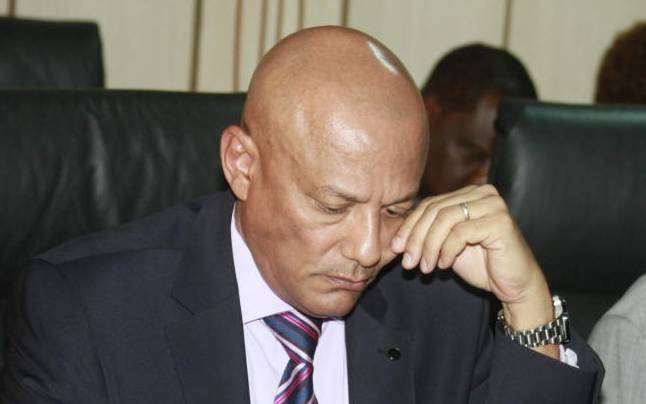
Acting IEBC CEO Moses Ledama Sunkuli. [Photo: Courtesy]
Sunkuli said the Commission’s preparedness for the 2027 polls is anchored in institutional coordination, legal and policy alignment, and operational planning, but acknowledged that progress is constrained by limited funding. He noted that the Commission requires approximately KSh 502 million for diaspora registration and voting activities, but has only been allocated KSh 400 million.
“The Commission is unable to carry out any diaspora mapping and registration activities due to the unavailability of funding in the current financial year,” he said, adding that engagement with the Justice and Legal Affairs Committee is ongoing to secure funding in the next financial year. Mapping and registration, he noted, could begin as early as July once funds are made available.
Limited registration centres also remain a major challenge, with voting in 2022 confined to just 12 countries. Legal constraints further compound the situation, as Regulation 34 of the Elections (Registration of Voters) Regulations ties diaspora registration and voting to the presence of Kenyan embassies or consulates, effectively restricting expansion to countries with diplomatic missions.
The Commission argued that this provision risks imposing “unreasonable restrictions” on the constitutional right to vote and called for its amendment to allow a more flexible, data-driven approach.
Low awareness among diaspora communities has further contributed to modest registration and turnout, despite adjustments such as revised voting hours to accommodate time zone differences.
Lawmakers also raised concerns over accessibility, particularly in countries such as Saudi Arabia, where some Kenyan workers reportedly do not have control over their passports. “This committee should come in and clamp down on the issue of passports being in the possession of employers,” said Sigowet-Soin MP Justus Kemei.
The question of alternative identification methods also arose, with Kisauni MP Rashid Bedzimba seeking clarification on whether the use of national identity cards would be possible in cases where Kenyans do not have their passports.
IEBC Director of Legal Services Chrispine Owiye said the use of national identity cards outside the East African region had been challenged in court, with the High Court ruling against their use in 2022. He added that the Commission is implementing a Supreme Court directive requiring the gradual expansion of diaspora voting to additional countries and polling stations in each electoral cycle.
Committee members further pressed the Commission on operational inefficiencies, including long queues witnessed in previous elections.
Ruiru MP and Committee Vice-Chairperson Simon King’ara urged the Commission to strengthen public awareness of measures aimed at easing congestion, including the establishment and promotion of additional polling stations.
In its submission, the Commission appealed for support to enable effective diaspora participation, including amendments to the legal framework, adequate and timely funding, stronger inter-agency coordination, and sustained voter education and mobilisation.
Sunkuli cautioned that without these interventions, efforts to expand diaspora voting will remain limited despite the constitutional requirement for progressive access.