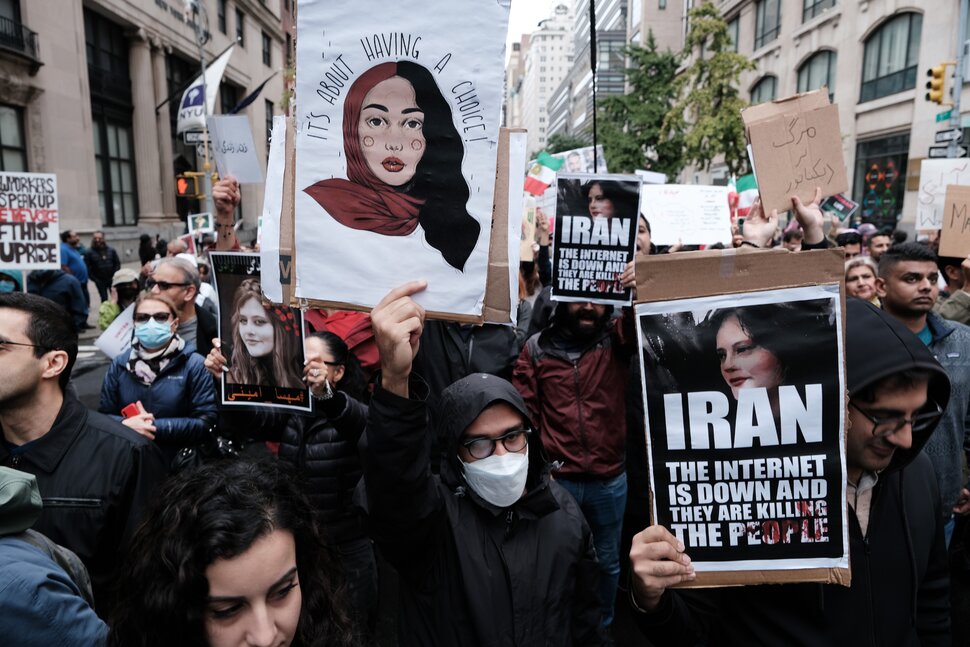
Compiled damage assessments from independent bodies within Iran indicate widespread destruction across at least 30 provinces. Religious institutions were hit hard, with at least 250 mosques and 20 Husseiniyahs damaged, including the destruction of the entrance to the Imamieh Mosque in Golestan Province
To unlock the full article:
Choose one of the options below:
- Ksh 10 – This article only
- Ksh 50 – Access to ALL articles on the site (full site access)
- Ksh 300 – Monthly subscription
- Ksh 2340 – Yearly subscription (10% off)
By The Weekly Vision Editorial Team
The scale of destruction emerging from Iran’s recent unrest reveals more than the cost of broken buildings and burned vehicles. It exposes a country under deep internal strain, grappling with a crisis that cuts across religion, the economy and public life.
Compiled damage assessments from independent bodies within Iran indicate widespread destruction across at least 30 provinces. Religious institutions were hit hard, with at least 250 mosques and 20 Husseiniyahs damaged, including the destruction of the entrance to the Imamieh Mosque in Golestan Province. Such sites have long been pillars of regime authority and social cohesion. Their targeting signals a troubling erosion of the Islamic Republic’s moral and ideological foundations.
Urban centres bore the brunt of the unrest. In Tehran alone, hundreds of private vehicles were torched, while commercial life was severely disrupted. At least 364 large shops and 419 small businesses were damaged. The financial sector suffered extensively: 317 bank branches were completely destroyed, another 4,700 partially damaged, and 1,400 ATMs vandalised, with banking losses estimated at more than $14 million.
Critical public services were not spared. Over 180 ambulances were severely damaged, medical facilities were attacked in cities such as Rasht and Ilam, and fire department equipment suffered losses valued at over $5 million. The education and cultural sectors also came under assault, with hundreds of schools damaged, libraries set ablaze, heritage sites attacked and cinemas targeted.
This pattern of destruction points not to isolated violence, but to sustained and coordinated unrest. More significantly, it reflects a shift in public anger. Protestors appear increasingly to be rejecting the system itself, not merely specific policies. The targeting of banks, state-linked institutions and religious symbols suggests a growing belief that the political order is irreformable.
Equally damaging for the regime is the geographical spread of the unrest. The fact that destruction occurred across dozens of provinces undermines the long-standing official narrative that dissent is limited to marginal groups or foreign-inspired pockets. Instead, it points to widespread frustration rooted in economic hardship, corruption, social restrictions and political exclusion.
The state’s likely response is familiar: tighter surveillance, mass arrests and coercive control. While repression may suppress unrest temporarily, history shows it often deepens resentment and radicalises future protest movements.
Regionally, Iran’s instability carries serious implications. Tehran is a central power broker in the Middle East, with influence stretching across Iraq, Syria, Lebanon and Yemen. Prolonged domestic unrest could constrain its ability to project power or finance allies. Conversely, the regime may seek to compensate for internal weakness by adopting a more assertive regional posture, raising the risk of dangerous miscalculations.
Neighbouring states are watching closely. A sustained protest movement in Iran could embolden similar movements elsewhere, particularly in countries facing comparable economic pressures and governance failures.
All signs suggest this will not be Iran’s last wave of unrest. The underlying drivers, youth unemployment, inflation, political repression, gender-based restrictions and limited avenues for dissent, remain firmly in place. Iran’s population is young, urban and digitally connected, making it increasingly difficult for the state to control narratives or suppress anger indefinitely.
Unless meaningful political and economic reforms are undertaken, a prospect that currently appears remote, future protests are likely to become more frequent, more decentralised and harder to contain. Iran appears to be entering a prolonged period of internal volatility, where protest is no longer an exception but a defining feature of its political landscape.
[/full]