By Benson Nyangweso
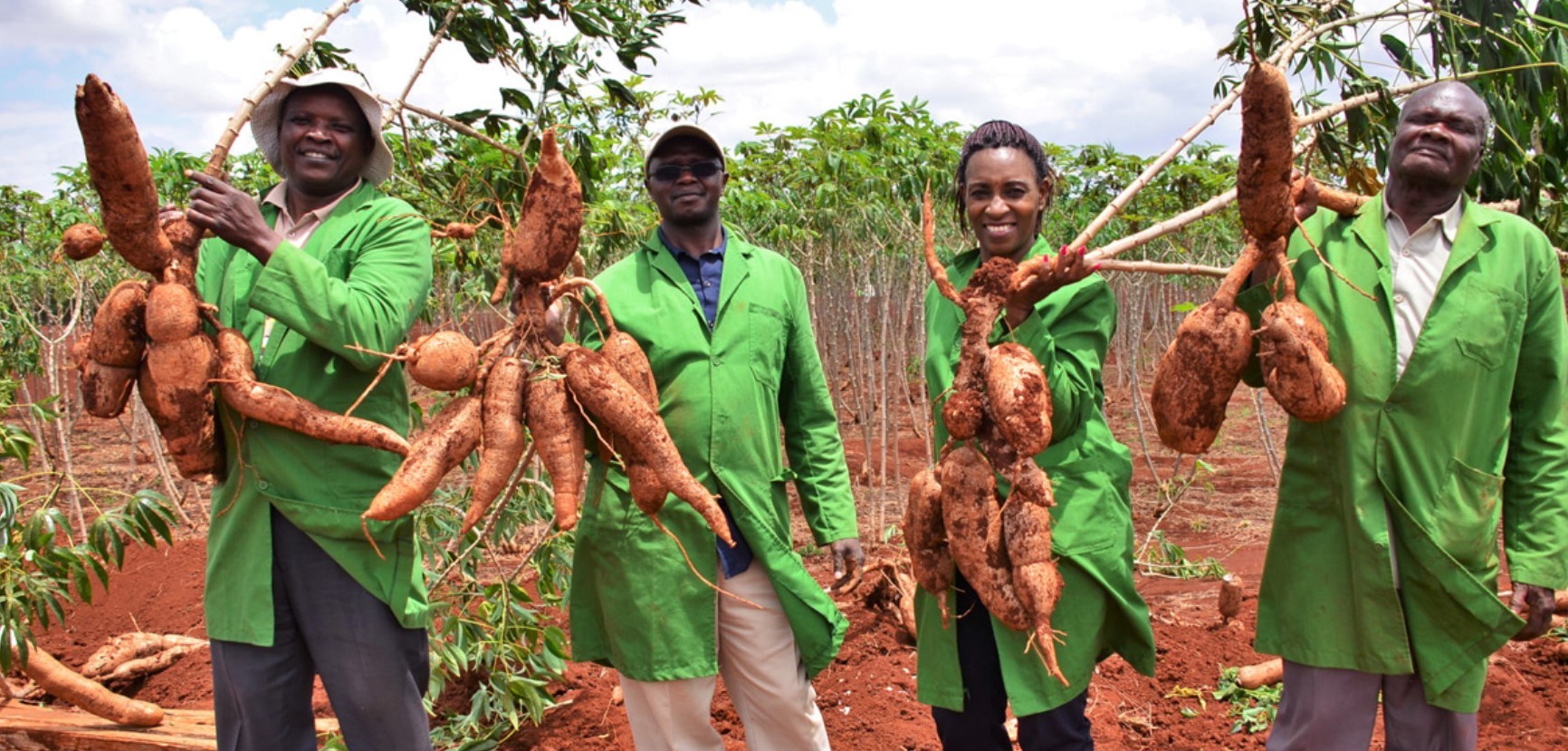
Kenya has completed national performance trials (NPTs) for genetically modified (GM) cassava varieties and is now awaiting approval for their commercial release. According to Josphat Muchiri, Acting Director of Technical Services at the National Biosafety Authority (NBA), the disease-resistant and drought-tolerant cassava varieties have passed final agronomic performance tests and are ready for the next stage of regulatory approval.
“The cassava varieties are now awaiting commercialisation,” Muchiri said.
The GM cassava, developed by the Kenya Agricultural and Livestock Research Organisation (KALRO), is engineered to resist Cassava Brown Streak Disease (CBSD), a viral infection that causes browning and malformation of edible roots, and to tolerate drought conditions.
The national performance trials were conducted in Mtwapa, Kandara and Alupe, with the aim of boosting yields and strengthening food security ahead of full commercial release in Kenya and Uganda.
Busia County is one of the country’s leading cassava-growing regions. Cassava is an important food crop and a source of income for many small-scale farmers. The area benefits from good rainfall, warm temperatures, and fertile soils, conditions well-suited for cassava cultivation. However, farmers face challenges such as pests, diseases, unpredictable weather, and low-yielding varieties, making improved cassava options, including GM varieties, particularly important for the county.
Muchiri said the NBA, whose mandate is to supervise and regulate the transfer, handling and use of genetically modified organisms (GMOs), is satisfied that the varieties meet safety and performance thresholds for human and animal health, as well as environmental protection.
He noted that Kenya has already commercialised other GM crops. Bt cotton was approved in 2020 and is currently cultivated on about 10,000 acres across Eastern, Central, Western and Nyanza regions. Bt maize was approved for commercialisation in 2025, although its rollout remains suspended following High Court conservatory orders.
Muchiri explained that Bt maize is genetically modified to resist maize stalk borer and fall armyworm pests, while Bt cotton is engineered to resist the cotton bollworm.
He added that Kenya is also developing other GM crops, including cassava resistant to CBSD, herbicide-tolerant soybean, and drought-tolerant maize varieties designed to withstand water stress.
Beyond crops, Muchiri noted that some GM animals have been approved in other countries, including GM mosquitoes in the United States and Brazil, GloFish for ornamental purposes in the US and Canada, and GM salmon in the same markets.
GMO research and development in Kenya is being undertaken at institutions including KALRO, the International Livestock Research Institute (ILRI), Kenyatta University, the International Centre of Insect Physiology and Ecology (ICIPE), and Masinde Muliro University of Science and Technology.
Muchiri revealed that the NBA’s mandate is set to expand to include biosecurity as a matter of national security, with the government currently reviewing a National Biosafety and Biosecurity Act.
The review will cover emerging technologies such as genome editing, synthetic biology, and gene-drive technologies, which Muchiri described as potential security risks.
“National Biosafety Authority already acts as a frontline defence at various border entry points,” he said, adding that the Authority conducts border patrols, market surveillance, and intelligence-led inspections to prevent the entry and circulation of unauthorised GM products.
“In line with this, quarterly market surveillance is carried out in shops and agro-dealers to ensure no unauthorised products have infiltrated the country through porous border points,” he added.
[/full]