Kenya acknowledged Brazil as a strategic partner, recognising its global leadership in agribusiness, manufacturing, energy, health, and technology. Brazil has supported Kenya’s agricultural revitalisation through initiatives such as the Cotton Victoria Project, a regional effort to enhance cotton production and farming practices across East Africa. Over the past decade, Kenyan exports to Brazil, including fish, coffee, and tea, have grown steadily, while Brazilian investments have bolstered industrial and agricultural development
To unlock the full article:
Choose one of the options below:
- Ksh 10 – This article only
- Ksh 50 – Access to ALL articles on the site (full site access)
- Ksh 300 – Monthly subscription
- Ksh 2340 – Yearly subscription (10% off)
By The Weekly Vision Business Desk
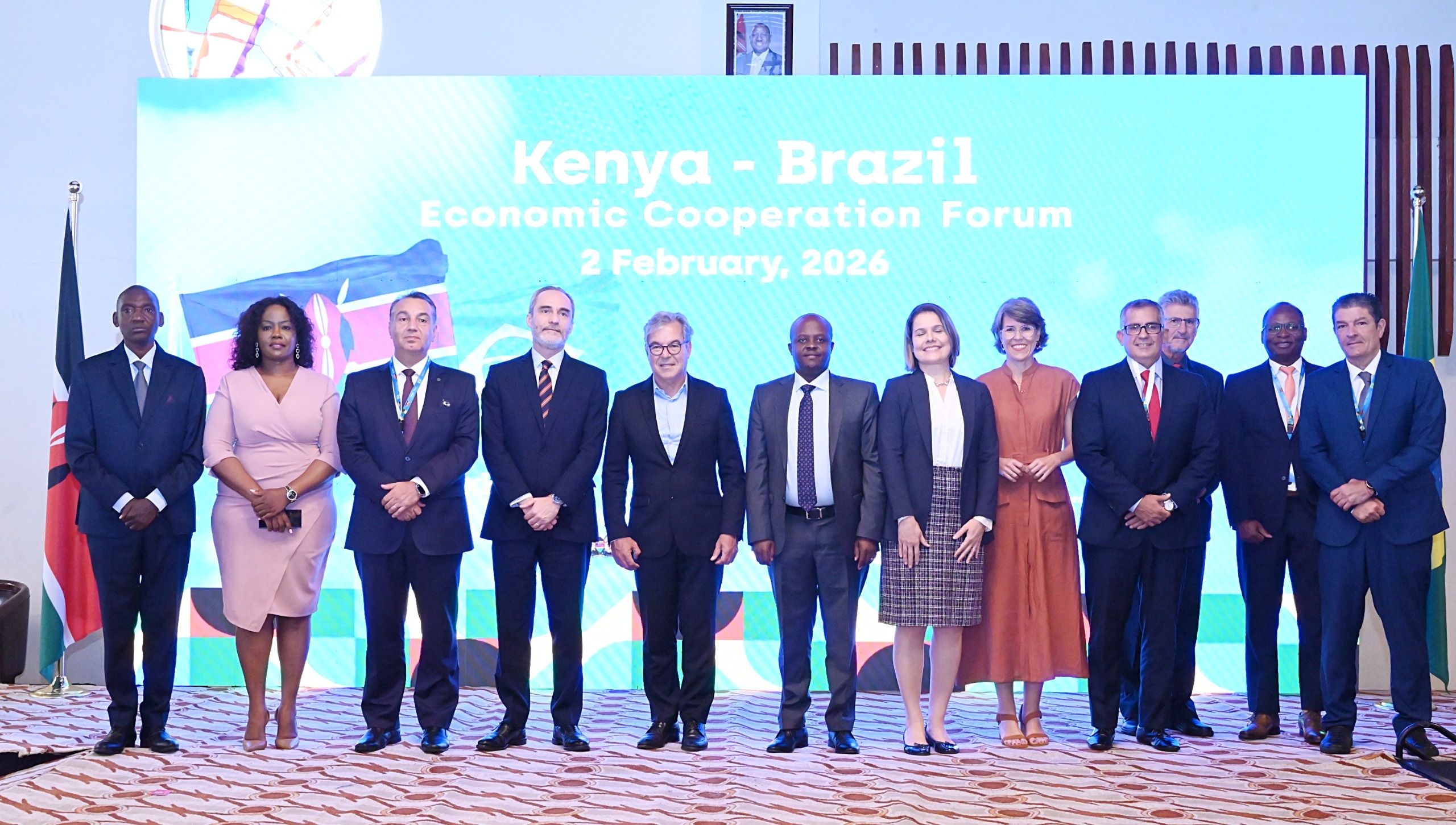
Kenya and Brazil have taken meaningful strides to strengthen their bilateral economic relationship, as senior government officials, investment promotion agencies, and business leaders from both nations gathered for the Kenya–Brazil Economic Cooperation Forum in Nairobi on Monday, 2 February 2026.
The event highlighted a shared commitment to expanding trade, attracting quality investment, and fostering industrial cooperation within a balanced, mutually beneficial framework. Led by John Mwendwa, Chief Executive Officer of Invest Kenya, the Kenyan delegation engaged with more than 26 Brazilian and over 40 Kenyan private-sector companies.
Mwendwa positioned Kenya as a stable, reform-oriented investment destination with preferential access to regional and continental markets through the East African Community (EAC) and the African Continental Free Trade Area (AfCFTA).“The discussions today clearly demonstrate Kenya’s readiness to translate investor interest into concrete, bankable projects,” Mwendwa stated. “Invest Kenya remains committed to supporting investors at every stage, ensuring a seamless, transparent, and predictable investment process.”High-level participation from both sides underscored strong political and institutional backing.
Key attendees included Jorge Viana, President of Brazil’s Trade and Investment Promotion Agency (ApexBrasil); Daniella Araujo, Chargé d’Affaires at the Brazilian Embassy in Nairobi; Ambassador Alex Giacomelli, Director of the Department of Trade Promotion, Investment and Agriculture at Brazil’s Ministry of Foreign Affairs; and Floice Mukabana, CEO of the Kenya Export Promotion and Branding Agency (KEPROBA).
The forum also spotlighted the upcoming Kenya International Investment Conference (KIICO) 2026 as a pivotal platform for converting dialogue into tangible investment deals, with priority sectors including agriculture, renewable energy, manufacturing, and technology.
“This forum is a concrete step toward expanding bilateral trade, attracting quality investments, and creating employment opportunities for Kenyans,” Mwendwa added. “Our priority is to foster partnerships that deliver shared value and sustainable growth for both countries.”Discussions emphasised opportunities for South–South cooperation in tackling global food security challenges.
Citing the 2025 Global Report on Food Crises, which indicated that more than 295 million people across 53 countries faced crisis-level hunger in 2024, largely due to climate-related disasters and economic instability, the forum highlighted digital agriculture technologies, inclusive finance, and youth- and women-focused food systems as priority areas for collaboration.
Kenya acknowledged Brazil as a strategic partner, recognising its global leadership in agribusiness, manufacturing, energy, health, and technology. Brazil has supported Kenya’s agricultural revitalisation through initiatives such as the Cotton Victoria Project, a regional effort to enhance cotton production and farming practices across East Africa. Over the past decade, Kenyan exports to Brazil, including fish, coffee, and tea, have grown steadily, while Brazilian investments have bolstered industrial and agricultural development.
Despite Brazil’s robust global export performance (totalling approximately USD 337 billion in 2024), bilateral trade with Kenya remains modest. In 2024, Kenya exported roughly US$1.2 million to Brazil, while imports from Brazil reached US$168.3 million. Cynthia Nyawira, Director of Nairobi at the Kenya National Chamber of Commerce and Industry (KNCCI), described the imbalance as an indicator of untapped potential rather than inherent barriers.
“This trade profile highlights opportunities to diversify exports, deepen cooperation, and build joint value chains,” Nyawira said. “Our goal is a balanced partnership that delivers tangible benefits to our economies and citizens.”Institutional collaboration featured prominently. KEPROBA and ApexBrasil reaffirmed their intent to formalise ties through a Memorandum of Understanding (MoU) to promote two-way trade, share market intelligence, and assist companies in integrating into global value chains.
Although internal approvals have delayed the formal signing, both agencies expressed confidence that the agreement will be concluded shortly. Jorge Viana identified priority growth sectors, including tea, textiles and apparel, fish, agro-processing, renewable energy, and emerging green technologies.
“Kenya’s comparative strengths align with Brazilian industrial capacities and market demand,” he noted. Participants stressed the importance of policy coordination, private-sector engagement, and technology transfer to unlock sustainable growth. Agriculture stood out as a natural pillar, with opportunities in livestock, poultry, dairy, and food processing, areas where joint initiatives could boost productivity, enhance food security, and expand regional and global exports. As the forum drew to a close, officials from both countries expressed optimism that sustained dialogue, stronger institutional linkages, and active private-sector involvement would yield measurable results, including higher trade volumes, increased investment, and job creation.
With complementary economic strengths, growing trade momentum, and aligned development priorities, Kenya and Brazil are building the foundations for a forward-looking partnership rooted in South–South cooperation and geared toward long-term economic transformation.
“This forum demonstrates that our engagement is not just about trade and investment; it is about building a strategic, sustainable, and mutually beneficial partnership for the future,” Viana concluded.
[/full]