By The Weekly Vision Reporter
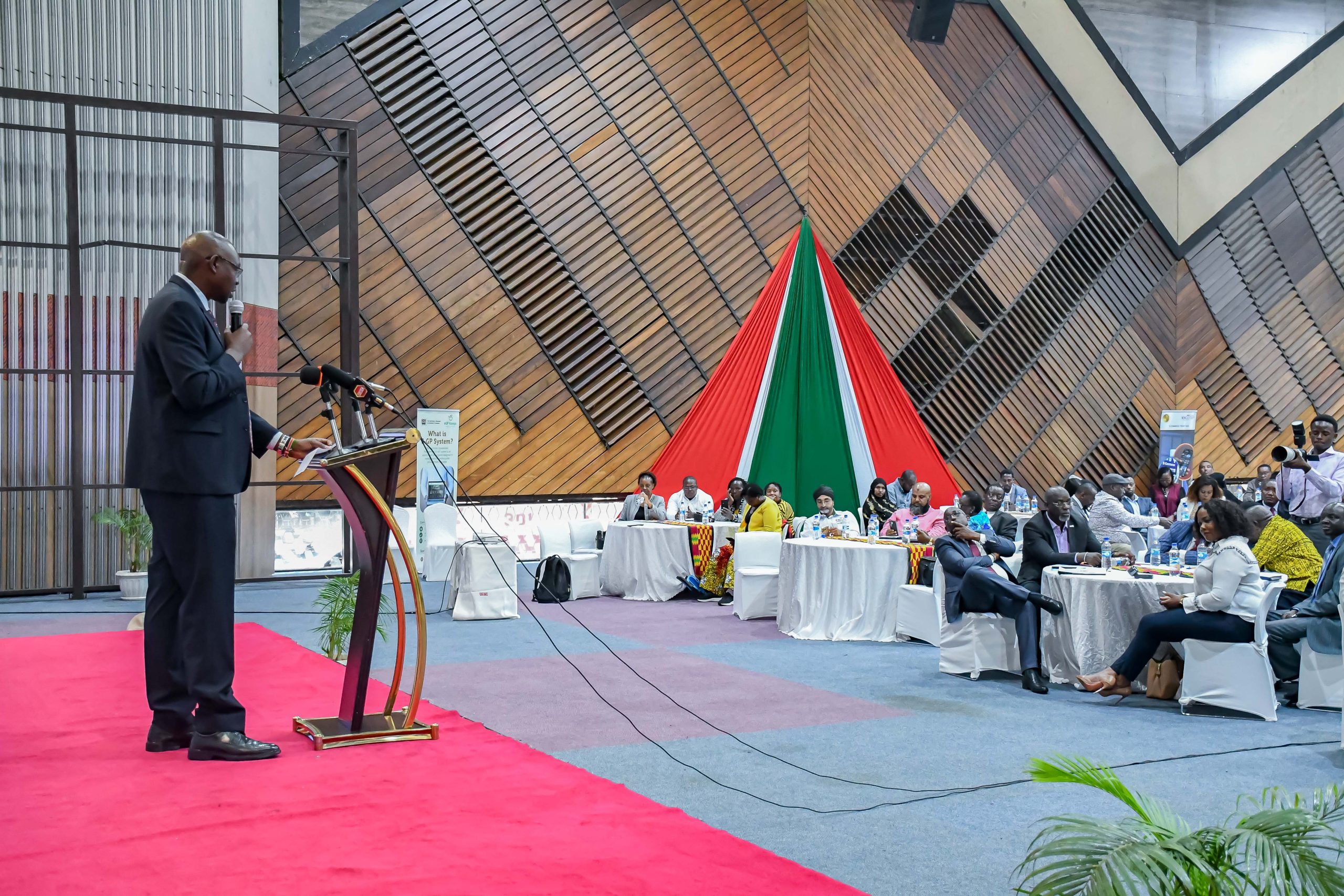
The Kenya National Chamber of Commerce and Industry (KNCCI) held its Annual General Meeting (AGM) on Thursday, 5 February, bringing together business leaders, government representatives, and development partners, with a strong call to the government to urgently clear pending bills and accelerate the adoption of market-friendly policies to support enterprise growth.
Speaking during the AGM, KNCCI President Dr Erick Rutto reaffirmed the Chamber’s position as Kenya’s leading trade support institution, mandated to promote the commercial and industrial interests of the business community. He emphasised that KNCCI remains firmly committed to advocating for a favourable commercial, trade, and investment environment that enables enterprises to expand, compete, and participate meaningfully in public procurement and trade.“Our priority as a Chamber is unlocking opportunities for businesses while systematically removing the bottlenecks that constrain growth, competitiveness, and liquidity, particularly for MSMEs,” said Dr Rutto.
KNCCI reiterated that pending bills continue to pose a major liquidity challenge, especially for small and medium enterprises. While commending the Government for the recent release of KSh 255 billion towards settling pending bills, KSh 80 billion to the roads sector and the balance across other sectors, the Chamber underscored the need for sustained action.KNCCI is committed to continued engagement with the National Treasury, Ministries, Departments, Agencies, and County Governments to ensure timely verification and settlement of bills, clear payment timelines, and measures to prevent future accumulation.“Pending bills remain a major constraint to business liquidity, especially for SMEs.
We commend Government for the release of the recent KSh 255 billion toward settling pending bills. KSh 80 billion to the roads sector and the rest to other sectors. KNCCI will continue engaging Treasury, Ministries, Departments, Agencies, and Counties to ensure: timely verification and settlement, clear timelines and prevention of future accumulation,” Dr Rutto said.The AGM highlighted the positive impact of the Bottom-Up Economic Transformation Agenda (BETA) in creating inclusive growth opportunities for the private sector.Under the Affordable Housing pillar, housing delivery has expanded significantly, with over 130,988 units under construction in 2025.
This growth, he said, has stimulated demand across construction value chains, unlocking new markets for suppliers, contractors, and manufacturers.On health reforms, he noted that the transition to the Social Health Authority (SHA) has seen membership expand from eight million under NHIF to over 28.8 million, increasing demand for private health services and related supply chains. KNCCI called on the government to prioritise payments to service providers to sustain service delivery.
The NYOTA Youth Empowerment Programme, targeting over 820,000 young Kenyans with skills training, apprenticeships, and access to capital, was also cited as a major pipeline for new entrepreneurs. KNCCI affirmed its readiness to onboard NYOTA beneficiaries into the Chamber, integrate them into formal business networks, and expand their market access.KNCCI urged the government to fast-track reforms aimed at lowering the cost of doing business. On licensing, the Chamber noted that businesses require 10–15 licences and permits on average, with compliance costs accounting for 20–30 per cent of MSME operating expenses. The Chamber advocated for harmonisation and consolidation of licences, elimination of duplicate permits, digital single-window licensing platforms, and adoption of a “One Business, One Licence” principle.
Access to finance for MSMEs was also emphasised, with calls for increased capitalisation of institutions such as Kenya Development Corporation (KDC) and Kenya Industrial Estates (KIE), and for the government to ring-fence contracts of up to KSh 5 billion for local firms, including in contracting, not just supplies.KNCCI announced a partnership with the National Treasury to capacity-build suppliers on the electronic Government Procurement (e-GP) system, positioning the Chamber as a bridge between government systems and private sector readiness.On privatisation, KNCCI welcomed the government’s move as a step toward efficiency and fiscal sustainability, stressing that privatisation must ensure meaningful private sector participation, protect local investors, and avoid crowding out SMEs.
The AGM underscored KNCCI’s expanding role in trade diplomacy and export promotion. The Chamber called for support from the Ministry of Trade to establish a statutory chamber, strengthen public-private dialogue, address trade imbalances, and boost exports through financing, joint ventures, and business networking.KNCCI also reaffirmed the strategic importance of its international offices in China and Dubai to support exporters, protect Kenyan businesses, and facilitate contract enforcement.
In closing, KNCCI reaffirmed its commitment to being a trusted partner to the government, a strong advocate for business, and a catalyst for growth, trade, and enterprise development. Members were encouraged to actively participate in e-procurement trainings, engage the Chamber on policy challenges, and leverage KNCCI’s local and international networks to grow their businesses.The annual general meeting saw participation from various diplomatic missions, including Ethiopia, Uganda, Saudi Arabia, and Germany.
[/full]