By The Weekly Vision Reporter
Amid Nairobi’s traffic-choked roads, flooded streets and towering mounds of uncollected waste, a landmark agreement has been signed that supporters say could revive the capital, but critics warn it may quietly undermine devolution.
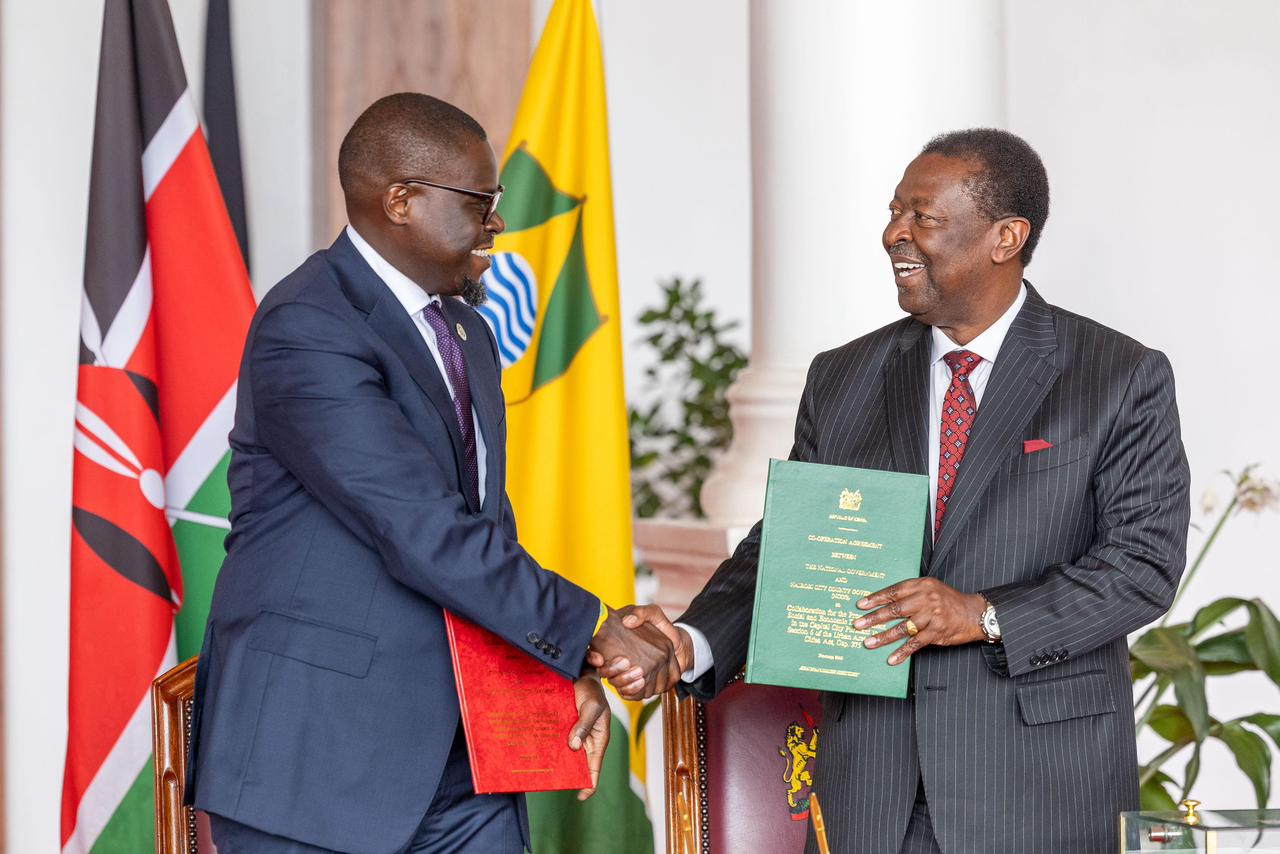
The cooperation pact, signed at State House, Nairobi, on 17 February 2026, between the national government led by President William Ruto and Nairobi Governor Johnson Sakaja, promises to channel KSh 80 billion into Nairobi’s ailing infrastructure.
The deal targets solid waste management, roads, urban mobility, street lighting, markets for small and medium-sized enterprises, housing infrastructure, water and sanitation services, and environmental rehabilitation. For traders in Kibra navigating flooded markets after heavy rain, or commuters in Mathare walking home under dim streetlights, proponents argue the agreement could finally deliver tangible improvements.
President Ruto described the pact as a historic partnership designed to elevate Nairobi as Kenya’s economic engine and a competitive global city. Governor Sakaja echoed the optimism, insisting the agreement unlocks long-overdue funding without eroding county authority. “This is not a transfer of functions,” said nominated Senator Tabitha Mutinda, dismissing claims that the county is surrendering its constitutional mandate.
A group of Broad-Based Government lawmakers, including MPs Tom Kajwang’ (Ruaraka), Anthony Oluoch (Mathare), Peter Orero (Kibra), Phelix Odiwour (Jalang’o) (Lang’ata) and Esther Passaris (Nairobi Woman Representative), alongside Senators Karen Nyamu and Hamida Kibwana, have rallied behind the agreement. They argue that Nairobi’s unique status as host to national institutions, diplomatic missions and international organisations makes closer intergovernmental coordination unavoidable.
However, a fierce backlash has emerged. Nairobi Senator Edwin Sifuna and Embakasi East MP Babu Owino have condemned the deal as a constitutional shortcut. Sifuna argues that the national government already owes Nairobi more than KSh 100 billion in outstanding rates and other payables, branding the promised KSh 80 billion as a misleading show of generosity.
“We want development, but only if it is undertaken strictly in accordance with the Constitution,” he said, urging the use of established mechanisms such as conditional grants and existing revenue-sharing frameworks.
The controversy has spilt into the Nairobi City County Assembly, where a special sitting on 20 February approved the formation of a 21-member ad hoc committee. The committee has 11 days to scrutinise the agreement, assess its budgetary implications and conduct public participation.
Kileleshwa MCA Robert Alai opposed the committee’s structure, arguing that established sectoral committees should instead handle the review. Baba Dogo MCA Geoffrey Majiwa called for ward-level consultations to ensure community-specific concerns are captured. At the same time, a section of MCAs has endorsed the pact, rejecting fresh impeachment threats against Sakaja and portraying the agreement as a catalyst for long-stalled urban reforms.
Beyond legal arguments, critics have raised deeper concerns about accountability. Allegations of unauthorised bank accounts and millions of shillings being irregularly handled within county structures have resurfaced, alongside fears that previously failed projects, including hospitals and stadiums, could be revived without meaningful oversight.
As the ad hoc committee begins its work and public participation gathers pace, a central question remains unresolved: will this agreement modernise Nairobi, or quietly weaken the devolved system Kenyans fought to secure?
With transparency obligations under the Public Finance Management framework, including parliamentary scrutiny and audits by the Auditor-General, the stakes could not be higher. For now, residents watch anxiously, hoping the promised billions will finally fix the city’s streets, and not merely deepen its political potholes.