By The Weekly Vision Political Desk
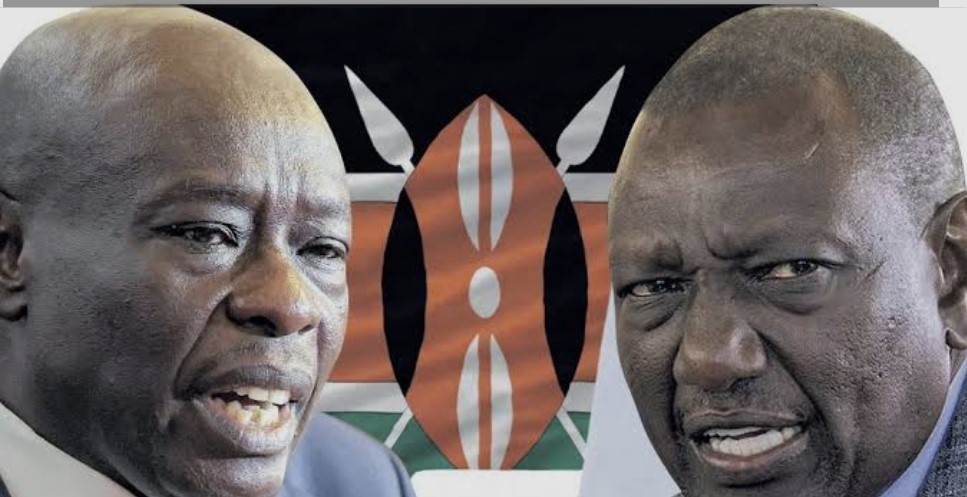
The political fallout between William Ruto and his former deputy Rigathi Gachagua is no longer a developing rift but a settled rupture that has already triggered far-reaching realignments ahead of the 2027 general elections.
What began as internal disagreements within the Kenya Kwanza regime steadily escalated into a public and acrimonious split, culminating in Mr Gachagua’s impeachment. In the aftermath, both camps have shifted from confrontation to consolidation, each working to build new political formations and reconfigure alliances nationwide.
The focus has now moved beyond personal differences to a broader contest over political influence, particularly in the Mt Kenya region, a critical voting bloc that played a decisive role in the 2022 elections. Allies of Mr Gachagua have accused the Ruto administration of marginalising sections of leadership and concentrating power in the hands of a few, while supporters of President Ruto maintain that the government remains firmly on its development agenda.
At the same time, concerns continue to emerge over the independence and credibility of key institutions, notably the Supreme Court of Kenya and the Independent Electoral and Boundaries Commission (IEBC). Heightened political rhetoric around these bodies has raised fears among observers that public confidence in the electoral process could be eroded if tensions persist.
The recent reconstitution of the IEBC has become a focal point of political contestation. With the commission expected to oversee the 2027 polls, questions around its readiness and impartiality have intensified, prompting calls from leaders across the political divide for transparency and consensus in its formation.
Meanwhile, the shifting landscape is being compounded by internal manoeuvres within the Orange Democratic Movement (ODM) and other political groupings. Emerging factions, strategic recalibrations and quiet negotiations are signalling the early stages of coalition-building, as parties position themselves for the next electoral cycle.
Political analysts now argue that the country has moved into a new phase of pre-election politics, where alignments are being actively shaped rather than anticipated. “The fallout has already crystallised into distinct political camps,” noted a Nairobi-based analyst. “What we are seeing is not a looming split, but the consolidation of alternative centres of power.”
However, the intensifying political activity has raised concerns about its potential impact on national stability. Kenya’s history of election-related tensions continues to inform calls for restraint, with civil society organisations and religious leaders urging politicians to avoid inflammatory rhetoric that could heighten divisions.
There are also growing concerns that the early onset of campaign-style politics risks overshadowing urgent governance priorities, including the rising cost of living, unemployment and public debt pressures. Critics warn that prolonged political contestation could slow policy implementation and weaken public trust in leadership.
As new alliances take shape and political camps entrench themselves, attention is increasingly turning to how these formations will influence the balance of power heading into 2027. The post-fallout landscape suggests a highly competitive race, defined less by past rivalries and more by emerging coalitions and shifting loyalties.
In this evolving context, the Ruto–Gachagua split has become less of a singular political event and more of a catalyst for a broader reorganisation of Kenya’s political order, one that is already redefining the road to the next general election.