
By The Weekly Vision Reporter
A deeply distressing incident in Kisii County has ignited national debate over poverty, healthcare costs, and the dignity of the dead, after a family resorted to a symbolic burial using a banana stem in place of their relative’s body.
The burial, which took place on or around 28 April 2026 in Motonyoni Village, Nyaribari Masaba, has come to represent the harsh realities facing many rural households when confronted with rising medical and mortuary expenses.
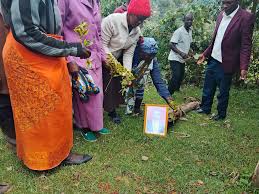
The deceased, identified as Obadiah Mokua Obwogo, had reportedly been held for nearly three months at PNN Mortuary in Nakuru. The facility is said to have declined to release the body until an outstanding bill of KSh 412,000 was settled. Despite efforts by relatives and well-wishers to raise funds, reportedly reaching about KSh 100,000, the family was unable to clear the balance. Faced with mounting pressure, cultural expectations, and the anguish of prolonged delay, they proceeded with a symbolic burial, using a banana stem as a substitute.
In many Kenyan communities, burial rites carry deep cultural and emotional significance. Delays in laying a loved one to rest are often viewed as both distressing and socially unsettling. The use of a banana stem, locally recognised in some traditions as a symbolic stand-in, reflects both cultural improvisation and desperation. Across several counties in the country, families have increasingly struggled to settle hospital and mortuary bills, particularly where storage fees accumulate daily after an initial grace period.
Healthcare financing remains a major challenge. Many households lack sufficient coverage under schemes such as the Social Health Authority (SHA), leaving them exposed to high out-of-pocket expenses. In cases involving prolonged illness or referrals to facilities outside home counties, such as Nakuru or Nairobi, costs can quickly escalate beyond the reach of ordinary families.
For regions like Kisii County, where many residents depend on small-scale farming and informal income, a single medical emergency can trigger a cascade of debt, asset sales, and long-term financial strain.
As public reaction continues to grow, the incident may yet prompt renewed calls for reform in healthcare financing and social protection, to ensure that no family is driven to such extremes again.