By The Weekly Vision Reporter
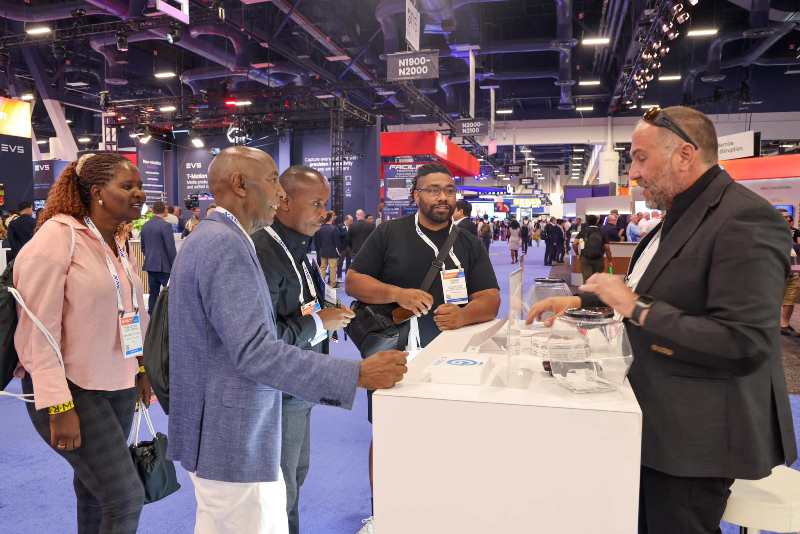
The National Assembly is seeking to adopt new cloud-based technologies to enhance its broadcasting systems and modernise live coverage of House proceedings. This follows a benchmarking visit to the NAB Show 2026 in Las Vegas.
Lawmakers say the insights gained will also inform Parliament’s review of Kenya’s media laws and regulatory frameworks. A joint delegation of Members of Parliament, regulators, and officials from the State Department for Broadcasting and Telecommunications attended the global media and technology forum to explore developments in artificial intelligence, newsroom technology, and digital broadcasting systems.
The team was led by Dagoretti South MP John Kiarie, Chairperson of the Committee on Communication, Information and Innovation. Also in attendance were Limuru MP and Vice-Chairperson of the Committee on Broadcasting and Library Services John Kiragu, Turkana Woman Representative Cecilia Ngetit, and Wajir South MP Mohammed Adow.
Major technology firms, including Adobe, Amazon Web Services, Microsoft, NVIDIA, and Google Cloud, demonstrated how artificial intelligence is now embedded across production, post-production, distribution, and newsroom workflows. The focus, delegates noted, has shifted from hype to measurable impact, including workflow automation, new monetisation models, and growing concerns around trust and content ownership.
The delegation also engaged with companies such as Evertz Microsystems, Black Box, Qumulo, G-Technology, Adobe, and Canon to assess potential upgrades for the Parliamentary Broadcasting Unit. The visit was framed as positioning Kenya strategically within the global media landscape while fostering international partnerships.
“Parliament has the potential for real-time dissemination of quality information, particularly through live broadcasts of committee sittings,” said Kiarie. “Existing legislation must be updated to accommodate digital platforms capable of supporting wider dissemination of parliamentary content,” added Adow.
Ngetit noted that digital broadcasting and cloud-based infrastructure represent “the path towards secure, firewall-protected systems for parliamentary work”, describing the technologies as “a revolution in how data and information are managed”. Kiragu said the delegation examined best practices in media regulation, broadcasting technologies, and platform governance, as well as newsroom transformation and audience engagement.
The National Association of Broadcasters, which organises the NAB Show, hosts the world’s largest gathering focused on broadcasting, streaming, artificial intelligence, and the creator economy. David Omwoyo, CEO of the Media Council of Kenya, who also attended, said artificial intelligence “is no longer a future-facing concept” and is already reshaping costs, revenue models, and partnerships. “The world must begin examining how capital, partnerships, and platform fragmentation are reshaping the market,” Omwoyo said.
The Media Council of Kenya and the State Department for Broadcasting and Telecommunications participated alongside MPs from the Committees on Communication, Information and Innovation, and Broadcasting and Library Services.
The delegation said it would seek a deeper understanding of emerging global regulatory frameworks, particularly in digital platforms, AI governance, and media convergence.
They added that exposure to new technologies would support Kenya’s transition towards advanced broadcasting, content production, and digital distribution systems. Improved coordination between the National Assembly, the Media Council of Kenya, and the State Department is also expected to strengthen media policy and legislative reforms.