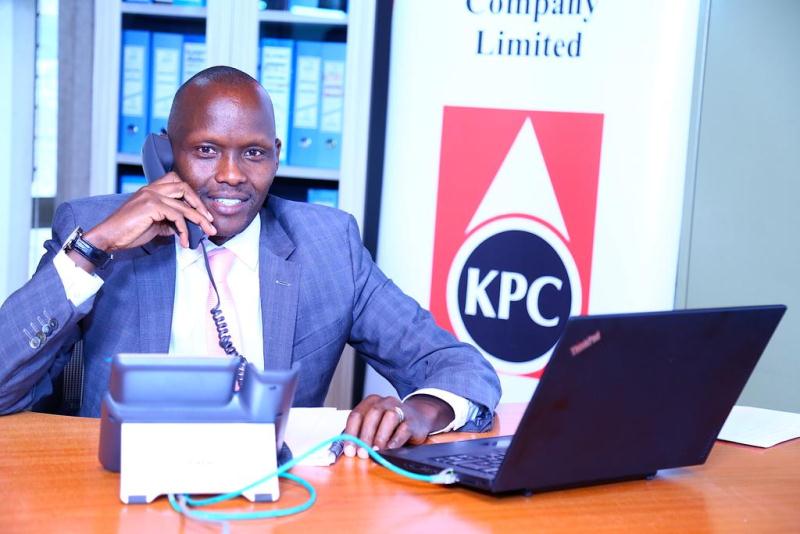
In its fourth employment diversity audit report, the Committee on Cohesion and Equal Opportunity warned the boards of the National Police Service Commission, the Office of the Auditor General, the Kenya Electricity Generating Company, and the Kenya Pipeline Company that failure to correct the inequalities would attract serious accountability action
By The Weekly Vision Reporter
Lawmakers have given four major public institutions six months to address deep-rooted ethnic, gender, youth and disability imbalances in their workforce, following a damning diversity audit by the Committee on Cohesion and Equal Opportunities.
In its fourth employment diversity audit report, the committee warned the boards of the National Police Service Commission, the Office of the Auditor General, the Kenya Electricity Generating Company and the Kenya Pipeline Company that failure to correct the inequalities would attract serious accountability action.
The report reveals that the four institutions are characterised by a heavy concentration of staff from a small number of ethnic communities, mainly the Kikuyu and Kalenjin, contrary to constitutional requirements on inclusivity and fair representation in public service.
According to the findings, Kenya Pipeline Company has the highest dominance of a single community, with employees from the Kalenjin community accounting for 29.27 per cent of its workforce. “The sampled public institutions reveal significant ethnic imbalances by having concentrated staff representation from a single ethnic community,” the committee states.
It further notes that promotion patterns in the four organisations demonstrate a clear preference for dominant communities, effectively locking out minority groups from career progression and entrenching systemic inequality.
Beyond ethnicity, the audit exposes widespread non-compliance with constitutional provisions on the inclusion of persons with disabilities (PWDs). None of the four institutions has met the minimum requirement of five per cent representation.
The report also raises serious concerns over youth inclusion in the public service, citing persistent structural barriers that prevent young people from accessing employment opportunities, despite young people forming the majority of the population.
Although most of the institutions were found to have complied with the two-thirds gender rule, women remain disproportionately concentrated in lower-level positions, with limited representation in senior management.
Data from Afrobarometer shows that about 80 per cent of Kenyans are aged 35 years and below, while those aged between 18 and 35 years account for 36 per cent of the total population, figures that further underscore the gap between the country’s demographic reality and public sector employment patterns. At the National Police Service Commission, only 24 of Kenya’s 46 ethnic communities are represented among its 284 employees.
The audit shows that the Kikuyu community is the most represented across all levels of the Commission. In senior management, only 10 ethnic communities are represented, while nine appear at middle management level and 23 at lower cadre.
Of the 124 permanent and pensionable staff, the largest share is from the Kikuyu community, accounting for about 30 per cent. The report further indicates that the community is over-represented when compared to its share of the national population.
In the last five years, 94 staff members were promoted, drawn from 23 ethnic communities. However, only one of those promoted was a person with a disability. Overall, PWD representation at the Commission stands at just 3.2 per cent.
Kenya Electricity Generating Company has 2,437 employees, but only 27 ethnic communities are represented. The report indicates that the Kikuyu community is the largest group overall, comprising 26.8 per cent of the workforce. Senior management positions are held by staff from only a small number of communities, while diversity at middle and lower levels remains limited.
The committee further finds that the Kikuyu community is significantly over-represented when the company’s staffing is compared with national population ratios. At Kenya Pipeline Company, only 26 ethnic communities are represented among its 1,305 employees.
The audit shows that the Kalenjin community dominates the workforce, accounting for 29.27 per cent of all employees. At the senior management level, only nine ethnic communities are represented, with Kikuyu and Kalenjin staff forming the largest share.
In the middle and lower cadres, the Kalenjin community remains the most dominant group. PWD representation stands at 4.14 per cent, still below the constitutional threshold.
The committee concludes that the company’s staffing structure violates the provisions of the National Cohesion and Integration Act. The Office of the Auditor-General employs 1,815 staff drawn from 33 ethnic communities.
However, the report shows that the Kikuyu community dominates both senior management and middle-level positions, while the Luo community forms the largest group in the lower cadre.
Only nine ethnic communities are represented at the senior management level, raising concerns about fairness, access and equal opportunity in leadership positions within the institution.
The committee has now given the four institutions six months to demonstrate concrete reforms in recruitment, promotion and career progression.
The lawmakers warn that unless the agencies realign their human resource practices with constitutional standards, senior officials and boards will be held personally accountable for perpetuating exclusion, inequality and discrimination in some of Kenya’s most critical public institutions.