For Azimio’s other partners, the crisis reflects a deeper contradiction: ODM continues to benefit from government appointments while insisting on controlling the leadership of the opposition in Parliament. This contradiction has steadily eroded trust and made coexistence within the coalition increasingly untenable. Within ODM, the political momentum is being driven by leaders aligned with a pragmatic engagement strategy with the Ruto administration
By The Weekly Vision Political Desk
The decision by the Orange Democratic Movement (ODM) to formally withdraw from the Azimio la Umoja One Kenya Coalition marks the most consequential political realignment in the opposition since the 2022 General Election.
Behind the official language of “sustained breaches” of the coalition agreement lies a deeper and more strategic calculation: ODM is repositioning itself closer to President William Ruto in order to secure political relevance, bargaining power and long-term survival in a rapidly changing post-Raila political landscape.
The shadow of the late Raila Odinga looms large over the current shift. For two decades, ODM’s electoral identity, coalition strategy and national appeal were inseparable from Raila’s personal political capital.
Without him, ODM is facing a structural dilemma: remain a weakened opposition party in a Parliament increasingly dominated by the ruling coalition, or recalibrate and embed itself within the architecture of power. The current leadership appears to have chosen the latter.
This is less an ideological realignment and more a pragmatic assessment that, in the absence of its long-time standard bearer, ODM must renegotiate its place in national politics directly with the Executive. Tensions between ODM and its Azimio partners had been simmering for months, but the dispute over coalition leadership triggered the final rupture.
The elevation of Kalonzo Musyoka as Azimio party leader, alongside the replacement of former ODM secretary-general Junet Mohamed, was perceived by ODM as a political ambush carried out without consultation, despite ODM being the coalition’s anchor partner.
From ODM’s perspective, the restructuring symbolised a loss of strategic control over a coalition it largely built and financed, particularly during the 2022 campaign.
For Azimio’s other partners, however, the crisis reflects a deeper contradiction: ODM continues to benefit from government appointments while insisting on controlling the leadership of the opposition in Parliament. This contradiction has steadily eroded trust and made coexistence within the coalition increasingly untenable. Within ODM, the political momentum is being driven by leaders aligned to a pragmatic engagement strategy with the Ruto administration.
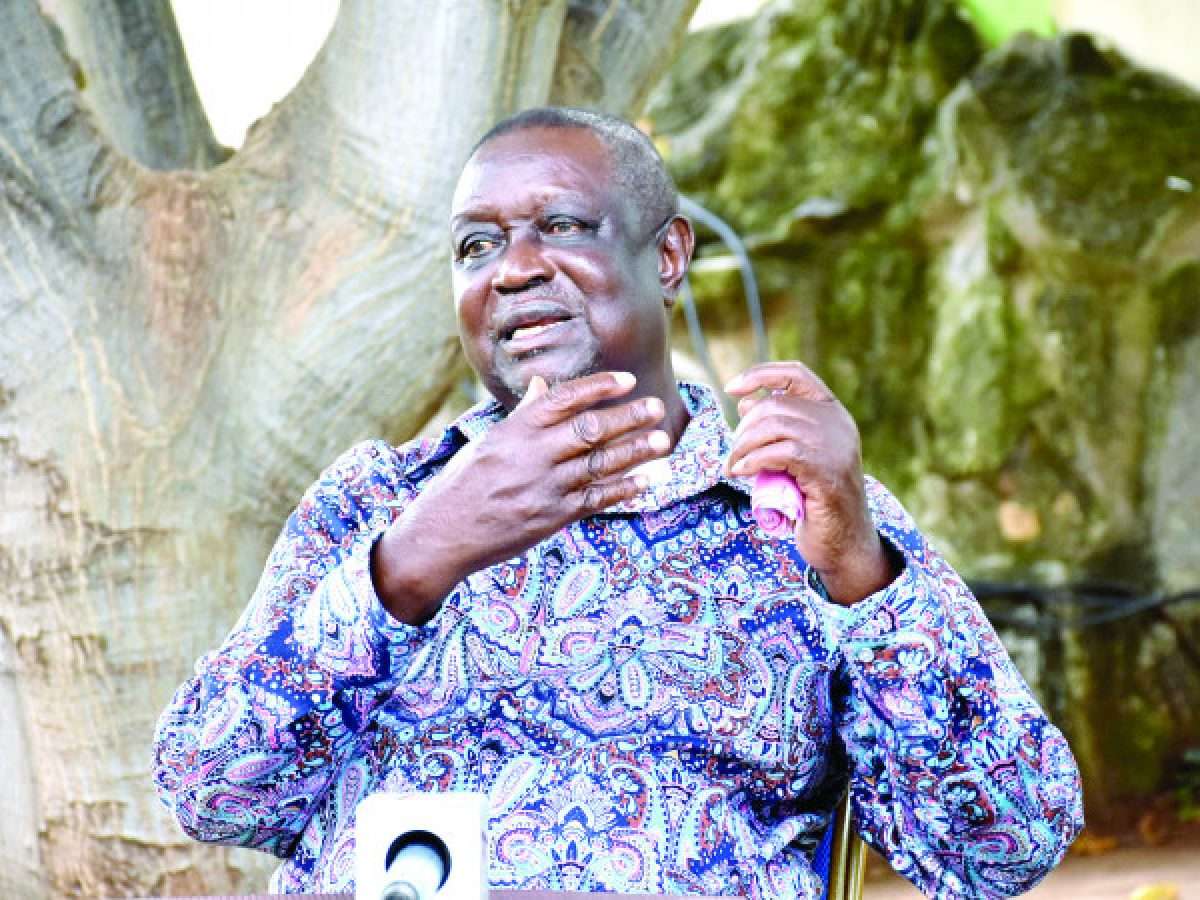
Leading this thinking is Oburu Oginga, who has publicly argued that no political party is created to remain in opposition indefinitely. The emerging doctrine within the party is that ODM should negotiate policy influence, development leverage and institutional appointments directly with the government rather than through a weakened coalition structure.
This approach is not merely about cooperation. It is about repositioning ODM as a stakeholder within the broad-based government arrangement, while retaining its independent party identity. The exit from Azimio is also an internal power play. The pro-Ruto wing is increasingly uncomfortable with vocal internal critics such as Edwin Sifuna, whose public opposition to the government and to ODM’s new direction has resonated with the party’s traditional support base.
By formally cutting ties with Azimio, the leadership hopes to consolidate authority, marginalise dissenting voices and impose discipline ahead of a wider party restructuring. In effect, the Azimio divorce is being used as a mechanism to redraw internal power lines within ODM itself.
The sharpest warning against the new strategy has come from Suba South MP Caroli Omondi, who views the move as a profound electoral miscalculation. His argument is rooted in political arithmetic rather than ideology.
ODM’s electoral dominance in metropolitan and cosmopolitan regions has historically depended on coalition politics, particularly alliances with Kamba and Luhya voting blocs. Walking away from these partners, he argues, strips ODM of the very demographic diversity that allowed it to win in Nairobi, Mombasa, Narok and Kajiado.
In his assessment, alignment with the ruling side may deliver short-term political security for party elites, but it offers little guarantee of future electoral success in competitive urban constituencies. Perhaps the most destabilising element of the internal debate is the claim that Raila himself had distanced the party from the broad-based government approach before his death.
If this narrative gains traction within ODM’s grassroots, the leadership will struggle to sell the current strategy as a continuation of the party’s historic mission. Instead, it risks being framed as a departure from Raila’s political legacy.
For a party whose identity was forged through opposition politics, reform rhetoric and mass mobilisation, that is a deeply sensitive fault line. Political analysts characterise ODM’s exit from Azimio as a tactical manoeuvre designed to secure access to State power and resources while maintaining leverage over parliamentary opposition positions. Yet it is also a high-risk gamble.
By blurring the line between government ally and opposition leader, ODM risks alienating both its traditional supporters and its remaining coalition partners. The attempt to straddle government and opposition politics simultaneously may prove unsustainable in the long run.
ODM’s forthcoming National Delegates Convention will not merely ratify its formal exit from Azimio. It will define whether the party rebrands itself as a pragmatic centre-left stakeholder within a broad-based government, or whether it can still credibly project itself as an alternative political force. In the short term, ODM may gain stability, protection and proximity to power.
In the medium to long term, however, the party faces an unresolved question: can a movement built on opposition politics reinvent itself as a cooperative partner of the very system it once sought to dismantle, without losing its soul, its base and its electoral relevance?