By The Weekly Vision Reporter
President William Ruto’s ambitious vision to position Kenya as East Africa’s digital and artificial intelligence hub has encountered a significant obstacle: the country’s limited electricity supply. In May 2024, during the President’s state visit to Washington, he announced a landmark $1 billion partnership with Microsoft and Abu Dhabi-based AI firm G42.
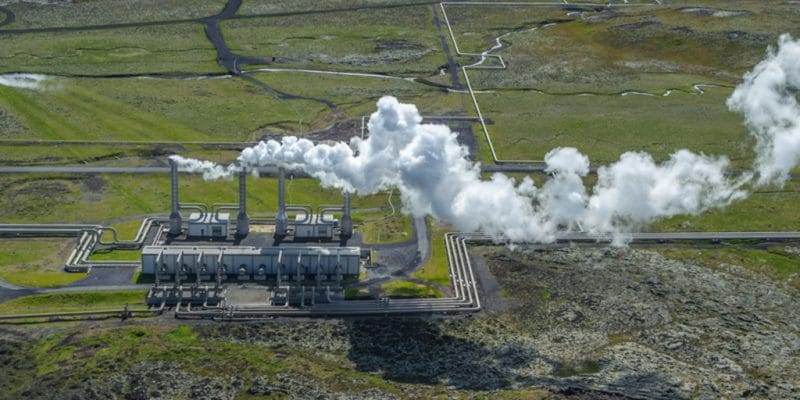
The project involved the construction of a major geothermal-powered data centre in the Olkaria region, aimed at establishing a new Azure East Africa cloud region and driving AI development across the continent.
The initial phase targeted 100 megawatts (MW), with long-term plans to scale up to a full gigawatt (1GW). However, the project has reportedly stalled amid disagreements over power capacity and financial guarantees. Kenya’s total installed electricity capacity currently stands at approximately 3,000–3,200MW, with peak demand recently reaching around 2,444MW.
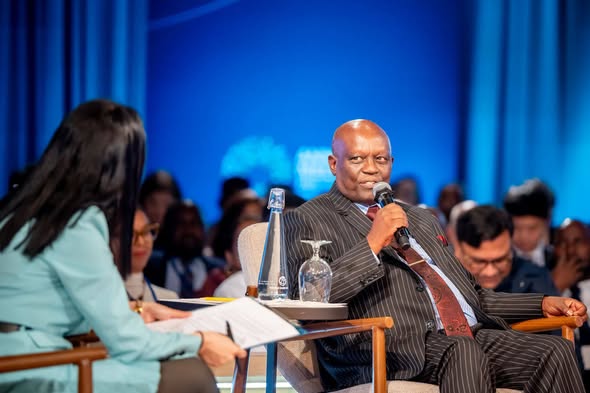
Experts say a data centre operating at full 1GW capacity would consume roughly one-third of the nation’s entire electricity supply. President Ruto himself highlighted the scale of the challenge at a recent event in Nairobi, stating: “To switch on that one data centre, we would need to shut off power for half the country. That’s when I knew there was a problem.”
Even the first 100MW phase would place substantial pressure on the Olkaria geothermal fields, which currently generate around 950MW. Additional challenges include transmission losses, infrastructure limitations, and competing demands from households, industries, and businesses.
The proposed data centre promised substantial benefits, including thousands of jobs, technology transfer, enhanced regional cloud-computing capabilities, increased foreign investment, and a boost to Kenya’s digital economy.
It also aligned with the government’s broader Bottom-Up Economic Transformation Agenda and its efforts to attract high-tech investment. Yet the episode underscores a critical tension in Kenya’s development strategy, the gap between visionary economic ambitions and the practical realities of infrastructure readiness.
Reliable, affordable, and sufficient electricity remains a foundational requirement for large-scale technology projects. The government has responded by accelerating plans to expand national electricity capacity to 10GW by 2030 while seeking substantial international funding for energy and transmission projects.
Government officials insist discussions are continuing and that a scaled-down version of the project could still proceed. Kenya retains several advantages, including a growing renewable energy mix, particularly geothermal, wind, and solar power, as well as a youthful and tech-savvy population.
However, the Microsoft-G42 project serves as a wake-up call. For Kenya to compete effectively in the global AI race, massive investment in power generation, grid modernisation, and energy storage will be essential. Without such investments, ambitious technology projects risk remaining on the drawing board.
As President Ruto and his administration navigate this dilemma, the coming months will prove critical. Balancing immediate energy security with long-term digital transformation may ultimately determine whether Kenya’s AI ambitions become reality or remain an aspiration.