By The Weekly Vision Reporter
The United States has criticised what it describes as an entrenched “brown envelope journalism syndrome” in Kenya, warning that the practice undermines editorial independence and threatens to erode the media industry’s most vital asset: public trust.
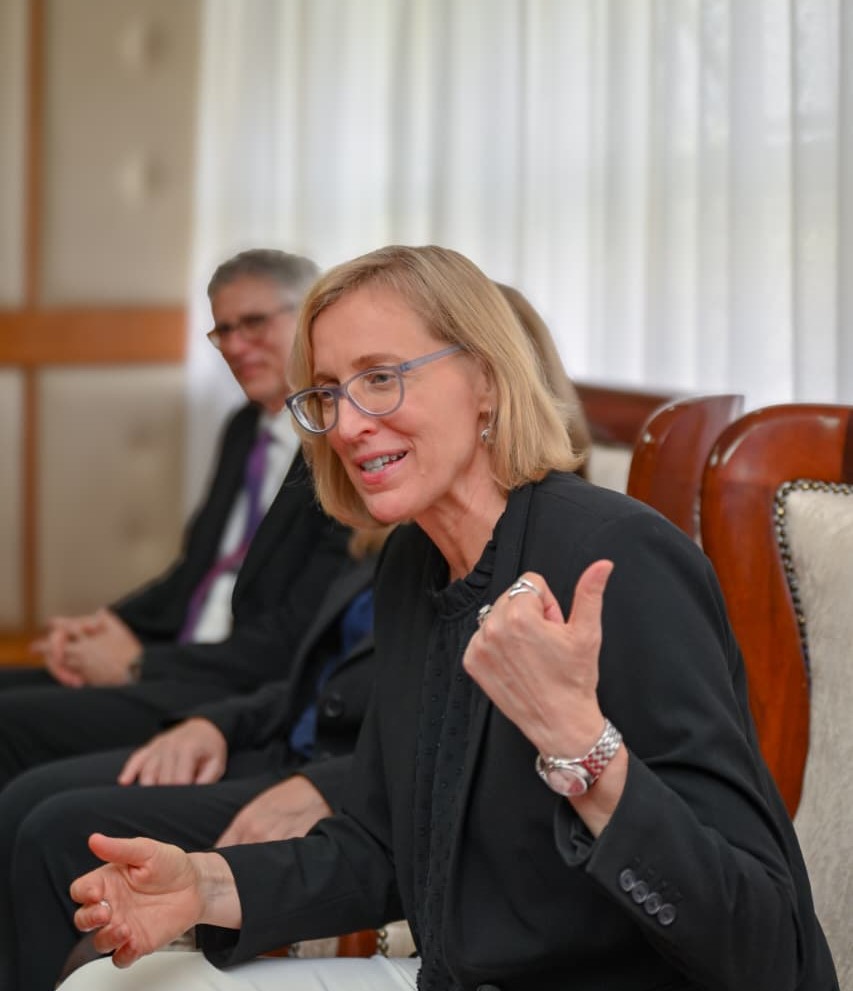
Speaking at a lecture at the University of Nairobi on Thursday, 30 April, ahead of World Press Freedom Day on 3 May, Chief of Mission Susan Burns, the acting US Ambassador to Kenya, revealed that the US Embassy has on several occasions been approached by media houses seeking payment for interviews or the publication of guest columns.
“I’m not going to name names, but I assure you we did not pay for coverage,” she said. “When opinions are written elsewhere, imported into the newsroom and published without disclosure, the byline becomes a mask. Journalism’s ability to be a voice for its audiences is diminished.” She added that such practices, whether termed “brown envelope journalism” or “malign propaganda”, undercut editorial independence and risk destroying public trust.
While acknowledging the financial challenges facing Kenyan media, including unpaid advertising debts, Burns cautioned that selling editorial space to the highest bidder amounts to surrendering press freedom.
“For the record, US media do not operate on government-controlled advertising; it is simply not a significant part of industry revenue.
Reporters in the United States do not need to be licensed by the government. As a matter of course, US media reject efforts that would compromise their independence or allow government censorship,” she said. Burns noted that the US Constitution, now over two centuries old, enshrines freedom of the press as a core principle, describing it as a safeguard against tyranny. She contrasted this with Kenya’s relatively newer constitutional protections, observing that Article 34 remains a young but significant pillar of democratic governance.
She praised Kenya’s long tradition of courageous journalism and media entrepreneurship, but warned that credibility is increasingly under threat. “In this era of deepfakes and AI-generated content, trust is more important than ever,” she said. “Media houses and journalists have an ethical obligation to disclose external financial influence. Kenyan citizens have the right to know who is paying for their news, whether it is a local business, a politician or a foreign government.”
Burns also raised concern over the use of ghostwriters to produce opinion pieces that are published without proper attribution or disclosure, arguing that such practices mislead audiences and damage institutional integrity. At the same time, she acknowledged the pressures faced by journalists, including delayed salaries and economic strain within the industry. She noted that the US Embassy has supported Kenyan journalists through training programmes and reporting opportunities abroad, emphasising that such support is always transparent and does not influence editorial content.
“We do not pay journalists to write pro-American pieces under their bylines without disclosure, nor do we censor or pre-screen their coverage,” she said. “We believe in the marketplace of ideas.” Despite her criticism, Burns reaffirmed support for press freedom in Kenya and welcomed scrutiny from local journalists, noting that democracy thrives on diverse and even dissenting voices.
“A free and independent press is a shared value that makes both Kenya and the United States stronger,” she said. “Now is the time to strengthen Kenyan journalism by focusing on ethics and rebuilding trust.”
[/full]