By The Weekly Vision Business Correspondent
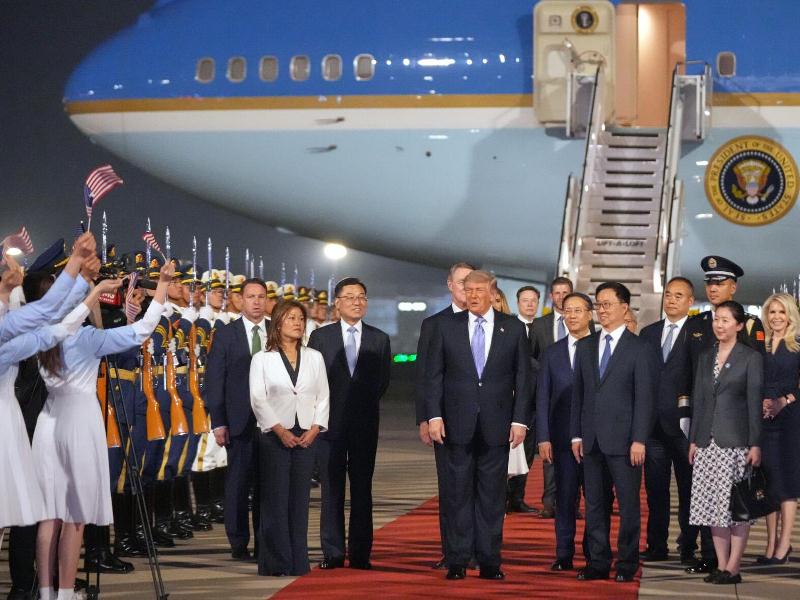
In a display of economic diplomacy rarely seen on such a scale, President Donald Trump arrived in Beijing this week, accompanied by a delegation of U.S. business leaders whose companies command trillions of dollars in market value.
The high-stakes visit, which includes direct talks with President Xi Jinping, signals a bold push to reshape U.S.-China economic relations amid ongoing tensions over trade, technology, and global supply chains.
The delegation reads like a who’s who of American capitalism. NVIDIA’s Jensen Huang, Tesla and SpaceX’s Elon Musk, Apple’s Tim Cook, BlackRock’s Larry Fink, Blackstone’s Stephen Schwarzman, Boeing’s Kelly Ortberg, and executives from Citigroup, Goldman Sachs, General Electric, Cargill, Micron, Qualcomm, and other corporate giants joined the trip.
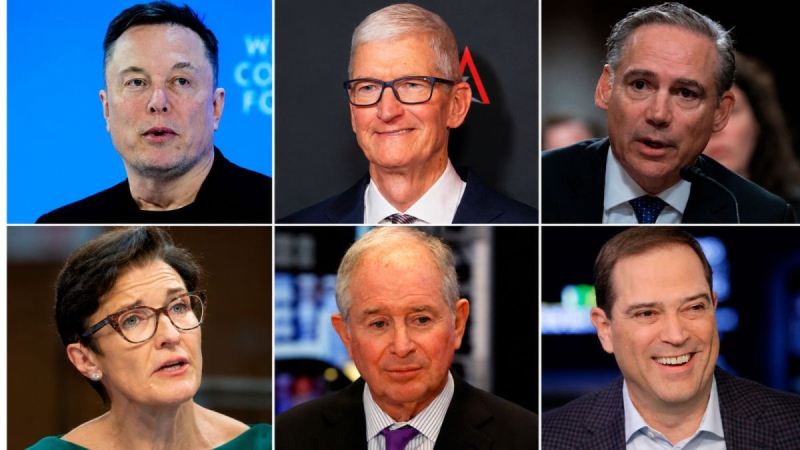
Together, the public market capitalisation of their flagship companies exceeds $12 trillion, a staggering concentration of innovation, capital, and industrial power.
President Trump travelled to China aboard Air Force One, accompanied primarily by senior administration officials and just two CEOs: Elon Musk (Tesla/SpaceX) and Jensen Huang (Nvidia), who reportedly joined the flight during a refuelling stop in Anchorage, Alaska.
The rest of the delegation, estimated at between 15 and 17 executives, including Tim Cook of Apple and Larry Fink of BlackRock, travelled separately, either on commercial flights or aboard private corporate jets.
Trump has framed the visit as an opportunity to “open up” China to greater American business participation while securing commitments on market access, intellectual property protections, agricultural purchases, and strategic industries.
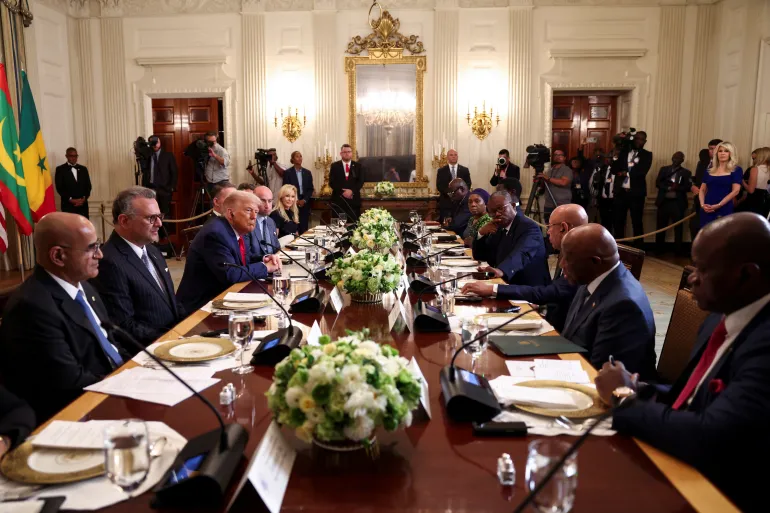
Reports from Beijing describe state banquets, high-level meetings, and discussions focused on AI cooperation, semiconductor flows, aviation deals, including potential Boeing aircraft orders, and broader trade stabilisation.
NVIDIA’s dominance in AI chips, Apple’s vast manufacturing footprint, Tesla’s success with its Shanghai Gigafactory, and BlackRock’s scale in asset management give the U.S. delegation considerable negotiating weight.
With Huang and Musk at the table, discussions are likely to have centred on export controls, AI leadership, and preventing a damaging economic decoupling between the world’s two largest economies.
Fink and Schwarzman bring influential perspectives on capital flows and the further opening of China’s financial markets, while Boeing, GE, Cargill, and others are seeking expanded export opportunities and more resilient supply chains.
China’s nominal GDP stands at roughly $20.85 trillion. The combined market power represented by the companies on this trip amounts to a significant share of that figure, underscoring the deep economic interdependence between the two superpowers.
The visit comes against a backdrop of persistent tensions over tariffs, technology restrictions, Taiwan, and global supply-chain disruptions. Even so, both sides appear motivated to ease tensions in key areas.
Chinese Premier Li Qiang emphasised friendship and cooperation during meetings with the U.S. executives. Critics argue that the approach risks appearing overly transactional and could give China additional leverage. Supporters, however, view it as pragmatic realpolitik, leveraging America’s private-sector influence where traditional government-to-government diplomacy may struggle to deliver results.
While outcomes remain uncertain, potential gains discussed during the visit include new purchase commitments for U.S. goods such as agricultural products, progress on pending Boeing aircraft orders, the possibility of eased investment restrictions for American firms, and discussions around setting frameworks for AI governance between the two countries.
Even without sweeping announcements, the image of unified American economic power in Beijing has already sent a strong signal to global markets.
As Trump and his CEO delegation navigate the talks, one thing is clear: the future of U.S.-China relations will be shaped not only through diplomatic channels, but also through boardroom negotiations and factory-floor realities.